Volcanic frontiers
“My name, Nemi, is a volcanic crater lake in Italy, so perhaps geology is what I was meant to do!” Nemi Walding explains how an A-level subject choice set her on a career path toward uncharted submarine landscapes
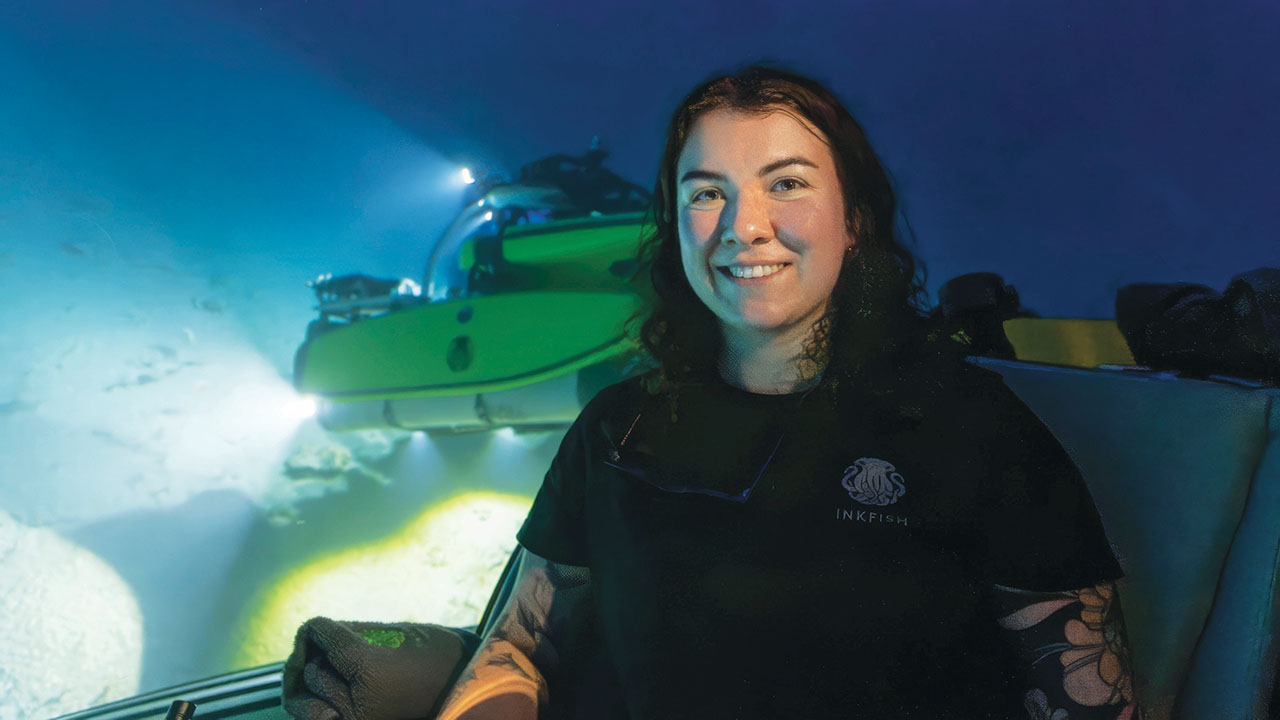
Nemi in a submersible operated by Inkfish LLC at ~120 metres below sea level offshore from the Turks and Caicos Islands (© Julian Braatvedt for Inkfish).
While Nemi Walding initially picked geology A-level largely because it offered opportunities for travel, she says this choice (and “an enthusiastic teacher who ignited my passion for the subject”) marked a turning point in her life. Studying for her BSc in Geology at the University of Plymouth cemented her decision to pursue a career in geoscience.
“I immediately loved fieldwork—I loved being outside and having energetic discussions with lecturers about what we were seeing.”
Nemi went on to study for a PhD at the University of Hull and is now a postdoctoral researcher at Kelpie Geoscience Ltd., an Edinburgh-based company that specialises in researching the geology of the seabed and sub-seabed.
Mind the gap
For her PhD and as part of the Catastrophic Flows Research Cluster (catastrophicflows.wordpress.com), Nemi used a novel combination of methods to study the influence of moisture content on pyroclastic density currents (PDCs)—unpredictable, ground-hugging flows of ash, debris and gas, caused by the gravitational collapse of explosive eruption columns.
“PDCs are deadly and pose a significant hazard to communities living around PDC-forming volcanoes. To understand PDC deposits in more detail, I used a multi-method approach combining fieldwork to observe the architecture and stratigraphy of natural deposits, experimental analogue modelling to simulate processes under controlled conditions, and geomechanical testing to quantify material properties. I focused on understanding how the addition of moisture alters material strength, erosional potential and preservation within volcanic sequences.”
Nemi showed that moisture plays a key—and previously overlooked—role not only in pyroclastic material behaviour, but also in deposit preservation. She found that small amounts of added moisture affect the static and flowing behaviours of pyroclastic material, influencing gas escape pathways, as well as preservation potential, with moist PDC layers more likely to be preserved in the rock record than their dry counterparts.
While Nemi stresses that “we’re still working out fundamental questions about the internal processes of PDCs and how their behaviours are recorded in their depositional record”, her findings have important implications for mitigation efforts and emergency planning strategies. The geological archive is typically biased towards large, infrequent eruptions. So, to create accurate hazard assessment maps, it is critical to recognise what’s missing from the rock record, such as smaller events and PDCs that may have been eroded, as well as what’s preserved.
The ocean realm
Around 75% of all volcanism on Earth occurs in the submarine environment. Primarily taking place along mid-ocean ridges, at volcanic arcs next to subduction zones and above hotspots, the typically deep-water locations of much submarine volcanism means that it often goes unobserved.
So, working with colleagues at Kelpie Geoscience Ltd, as well as at Inkfish LLC, a marine research and deep-sea exploration organisation, Nemi uses high-resolution bathymetric models, photography and videos to analyse volcanic and volcaniclastic deposits on the seabed and thereby reconstruct the evolution of past submarine volcanic events and the geological history of the seafloor in remote locations “from the coastal flanks of Samoa to the deepest depths of Earth in the Tonga Trench”.
“Currently, I am piecing together video footage from across the Tonga forearc and trench. As well as helping us to ground-truth our understanding of forearc and trench structures, this work provides a rare view of amazing outcrops at the bottom of the ocean. In these tectonically active areas, preservation of outcrops is limited, and their brief exposure provides a valuable glimpse into the geology that would otherwise leave little or no trace in the long-term geological record.”
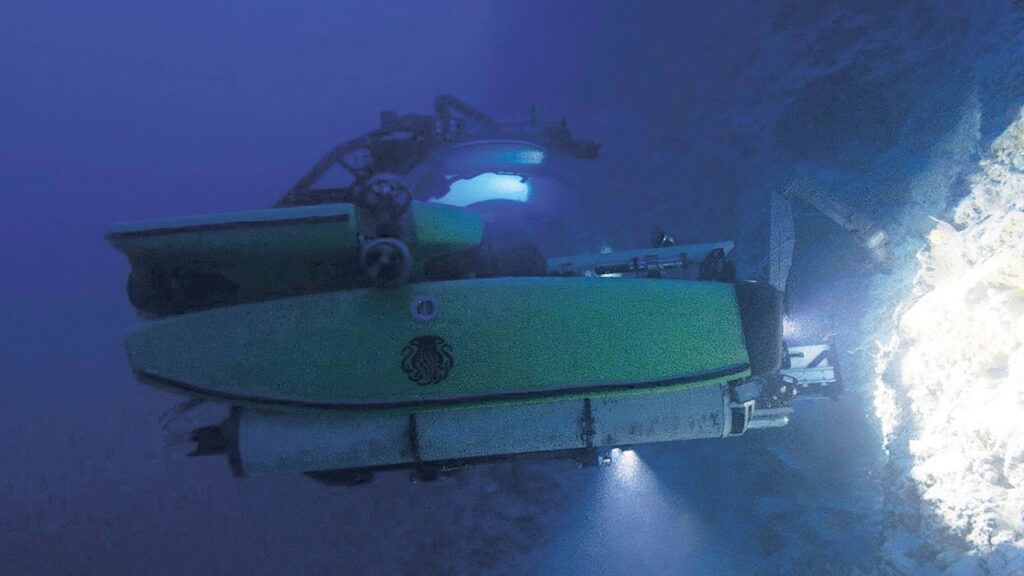
Nemi analyses submarine samples collected by submersibles such as this one operated by Inkfish LLC, shown here collecting samples at ~120 metres below sea level offshore from the Turks and Caicos Islands (© Julian Braatvedt for Inkfish).
While challenging, Nemi’s made some incredible discoveries: “We’ve found evidence of subaerially formed explosive volcanism, including pumice fall and pyroclastic density current deposits, at approximately 5,080 metres below sea level!” Nemi explains that “while surprising, the current-day positioning of the outcrop is made possible by downslope movements, including tectonic faulting, collapse and subduction that has been ongoing since Eocene times.”
At Samoa, Nemi is reviewing footage of extensive offshore lava flows collected by her colleagues.
“It’s a privilege to work on these never-before-seen outcrops and explore their origins in more detail. This is especially important on islands like Samoa, where rock degradation on land is high, so delving into the offshore realm can help piece together missing gaps in the eruptive record.”
While direct observations of active volcanism in the ocean remain rare, technological advances—such as autonomous underwater vehicles, remotely operated vehicles, cabled observatories and satellite monitoring—are transforming studies of submarine volcanism from sporadic observations to near-real-time monitoring. Nemi is enthused by where the field is heading.
“It’s an exciting time as, through advances in technology, we’re able to see and explore the seafloor in unprecedented detail. I’m particularly enthusiastic about future seafloor monitoring projects and the continued effort to record submarine eruptions in real-time. This has enormous potential to increase our understanding of volcanic eruption dynamics and processes.”
Early exposure matters
Nemi’s experiences are testament to the transformative impact of enthusiastic teachers and colleagues, as well as the vibrant and rewarding careers available to those who study geoscience.
“From A-level to PhD and now postdoc, I’ve been privileged to learn from exceptional teachers, mentors and collaborators, and to explore geologically incredible places. Each experience has deepened my passion for the subject and continues to inspire my work.”
Through advances in technology, we’re able to see and explore the seafloor in unprecedented detail
Like many in our community, Nemi feels that “we are at a point in time where geoscientists are essential in our objective of tackling climate change, natural hazards and resource sustainability” and she laments the closure of university geoscience departments, which is “limiting subject visibility and restricting opportunities for students to discover Earth science.”
To support the next generation of geoscientists, Nemi mentors students, gives careers talks, and contributes to the STEM outreach initiative, ‘Girls into Geoscience’.
She sees hope on the horizon: “I’m encouraged by the many excellent outreach initiatives working to inspire young people and demonstrate the broad, exciting and impactful careers available in geoscience.”
From innovative methodologies and groundbreaking research on volcanic processes to remarkable deep-sea discoveries, Nemi is not only an accomplished early career scientist, but also an inspiring role model for the next generation.
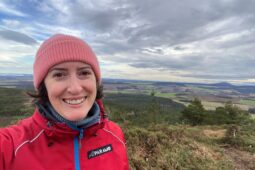
Dr Nemi Walding, Postdoctoral Research Fellow at Kelpie Geoscience Ltd., UK, and 2026 recipient of the Geological Society’s Wollaston Fund
Interview by Dr Amy Whitchurch, Executive Editor, Geoscientist magazine