Stewarding the Society
My aim has been to help the Society develop its prominence to match its eminence,” says Jon Gluyas, as he reflects on his time as President
What achievements are you most proud of from your time as President?
We secured Burlington House’s lease for 999 years and brought the Society’s Charter and Bylaws up to date. Both are enormous achievements that enable the Society to deliver on its mission and focus more on how we can best contribute to science and society. The quest to ensure the Society has a home began around 25 years ago and what we might term ‘phase 1’ was in full swing when I served on Council from 2003. I am exceedingly proud of the generations of Officers, past Presidents and Council members who have helped deliver this stunning outcome.
My time in office has also been about widening participation, with the aim of helping the Society develop its prominence to match its eminence. It is a topic close to my heart, and I am proud to have played a small part in shaping and delivering our outreach activity. In particular, ‘This is Geoscience’, launched last year, is the Society’s flagship initiative for engaging with young people, those thinking about higher or further education and those in search of a career. It links seamlessly with our Careers Day and with the events we run for youngsters to learn about geoscience, its applications and practitioners from an early age. We also have two of our team taking geoscience to the high seas, delivering enrichment talks and trips on cruise ships. The feedback we receive on all these activities proves we are on the right track to inspire the next generation of geoscientists.
Also, led by incoming President Jessica Smith, we have brought the Society’s Charter and Byelaws up to date, which brought us into constant contact with the Privy Council, enabling us to refresh knowledge in government about the importance of geoscience to society.
Is there anything you wish you had done differently?
Though I previously lamented that I had not created a ‘big initiative’ for the Society, our Chief Executive Simon Thompson reminded me that I have successfully facilitated the delivery of processes and activities that I inherited, such as securing the lease. If I had created a bold new project, my term would have ended before it was delivered and, as such, it may have become a burden on those who follow me. I do have one regret though: I would have liked to meet all our Officers face-to-face to get to know them better and seek their views on how the Society could improve further.
How has the Society changed during your time as President?
The ‘This Is Geoscience’ campaign is a great example of how we are increasingly taking our knowledge of Earth to young scientists in schools and universities. By ensuring they are better informed about Earth’s resources, energy systems, environmental protection, waste management, and a host of other geoscience topics, we can inspire them to shape the world for generations to come.
The feedback we receive on our outreach activities proves we are on the right track to inspire the next generation of geoscientists
Beyond this, the Society is also reaching younger children, running events that draw them into Burlington House (such as Space Week and CSI Geoscience), as well as connecting with them at festivals across the country, theme parks and Girlguiding events. I hope these activities continue to grow.
What are the most important challenges the Society faces?
Globally, society is becoming ever more polarised and insular, with nations or smaller groups protective of what they have in the face of threats, both real and imagined. Yet we all share Earth and its resources; the Society represents our planet and has the knowledge to support fellow humans in understanding that we all must play our part in conserving it for the future. The challenge for us is to share our knowledge in non-partisan ways—I believe it is something we can and must achieve.
What advice would you give to your successors?
Allow the Society to flourish and give your support to its activities, Officers and Fellows. President Elect, Jessica Smith, already demonstrates this with aplomb!
What is the biggest challenge facing geoscience today?
Geoscience is largely invisible to the public, politicians and other key influencers—except when it comes to bad news (e.g. fracking, landslips, induced seismicity), so the positive contributions we make across all sectors of society remain unseen. Promoting geoscience is tough in a world that seems to revolve around trivia and short-term interests, yet I believe there is ample opportunity for more engagement. We need only to look at astronomers and cosmologists, who are light years ahead in terms of developing citizen science.
Whilst it would be easy to concentrate on the shrinking number of UK universities offering geoscience and its near-absence from our schools’ curriculum, I would like to highlight that there is shifting momentum globally. Back in 1985, I worked as a petroleum geologist in Guangdong, China, where there was little interest in geoscience at universities, yet today there are entire universities dedicated to our field in Wuhan and Beijing, in addition to the many universities that have geoscience departments. More recently, the discovery of petroleum in Ghana and Mozambique has led directly to the uptake of geoscience by many youngsters there.
We may be seeing the start of a positive revolution in the UK too. Keele University has introduced the Level 6 Geoscience Degree Apprenticeship, which offers a pathway for aspiring geoscientists by combining degree-level learning with on-the-job training. The first cohort started in September 2025 and it was oversubscribed, which can only be a good sign.
Are there any upcoming geoscience developments you are particularly excited about?
I am proud to have helped found the UK National Geothermal Centre (a non‑profit that aims to accelerate geothermal development in the UK; ukngc.com). This organisation can support national growth and climate protection by displacing fossil fuels with geothermal energy, whilst also generating industry jobs. I have also played a role in discovering new helium resources free from greenhouse gases and natural hydrogen accumulations, which could make a material difference to global clean energy production worldwide.
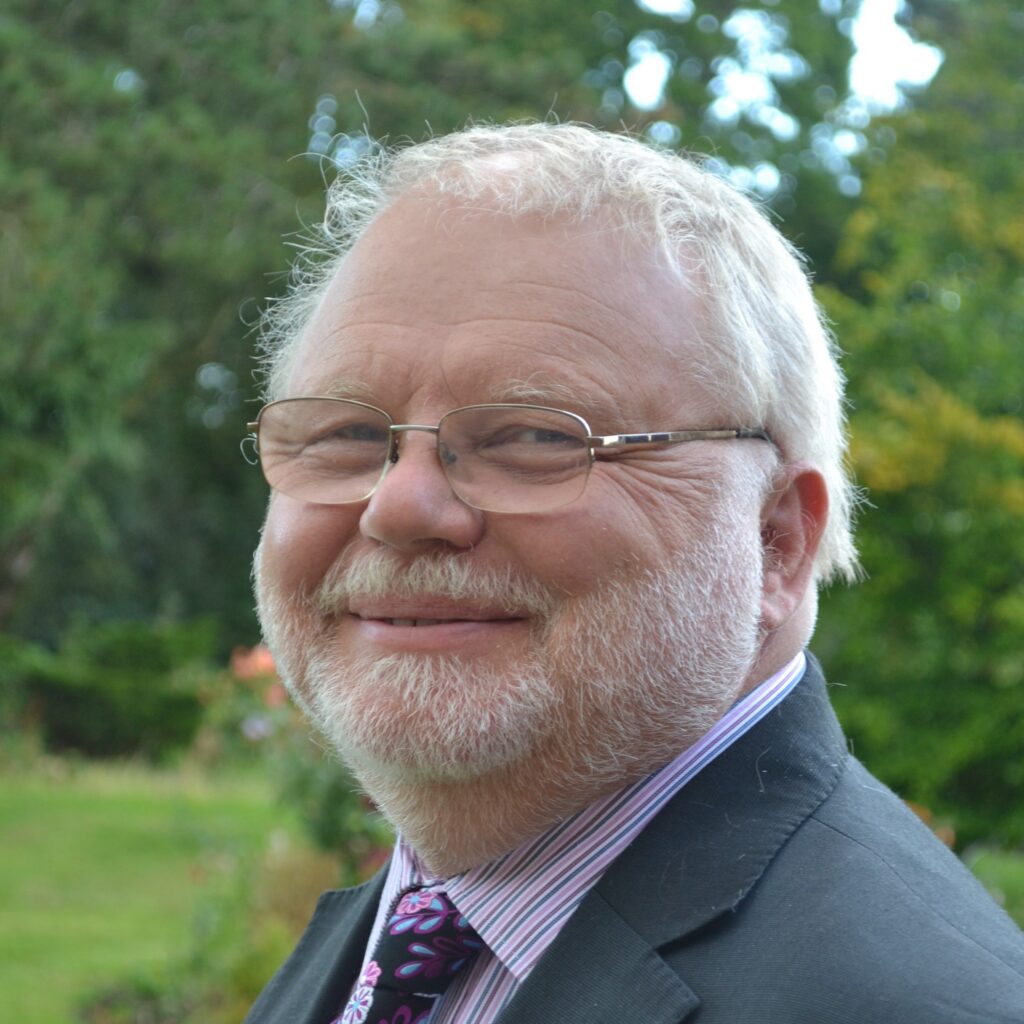
Professor Jon Gluyas is Chair in Geoenergy, Carbon Capture & Storage at Durham University and the Outgoing President of the Geological Society.