A vibrant future
Incoming President Jessica Smith discusses her geoscience career and hopes for the Society’s future during her Presidency
What first drew you to geoscience?
I marvel at those people who can tell stories about falling in love with geoscience as a child and going on to pursue this passion. If I am honest, I was not particularly aware of the subject until I went to university, and only started to appreciate the range of exciting careers that geoscience offers after graduating.
Whilst at school, an archaeological dig took place a few minutes’ walk from where I lived in the area of Banffshire where the Deskford Carnyx—a Celtic boar-headed war trumpet—was found in the 1800s. This captured my attention, so I studied archaeology at the University of Glasgow. Here, I chose Earth science as my second subject, simply because volcanoes and fossils sounded fun, but I ended up switching to study that instead.
Tell us about your career to this point.
When I graduated in 2004, I wasn’t interested in a career in oil and gas or a more academic career path, which led me to the ground engineering sector. I worked for a few years before completing an MSc in Engineering Geology at Imperial College London in 2009. For this, I was incredibly fortunate to receive funding from the Engineering and Physical Sciences Research Council, otherwise I doubt it would have been an option for me. I credit this MSc for giving me exposure to the diverse opportunities that are possible for engineering geologists and for demonstrating the value of the state investing in students.
I spent a few years at the company TRL where I gained experience in transport-related research, including the SafeLand project on landslide risk and management in Europe. Not only did this offer the chance to travel to some fantastic European cities, but it was also a great way to nurture my professional network, which has been invaluable.
After TRL, I joined Golder Associates (now part of WSP), where I spent much of my time working on rockfall protection in Gibraltar. This was a hugely enjoyable period with lots of time on site which, for an engineering geologist, is one of the best ways to learn. I even presented one of my favourite projects from this time for my Chartered Geologist interview.
Looking back, joining Atkins (now AtkinsRéalis) in 2015 was an important step for me professionally, as well as for my involvement with the Society. Atkins is a true champion of the Society thanks to the efforts of many, including Past President David Shilston. Atkins supported me when I was successfully elected to Council in 2017 and went on to become Vice President Regional Groups. I am very grateful for the opportunity to develop my skills as an engineering geologist as part of a technically excellent practice, while being able to explore other avenues to contribute to the geoscience community. It is rewarding to see ‘big business’ making meaningful contributions to organisations like the Geological Society by supporting volunteer efforts—we are so fortunate to have such an engaged and dynamic volunteer community.
I then joined SSE Renewables, where I was seconded to work on the proposed Coire Glas Pumped Hydro Storage project, near Fort William in Scotland. As the project’s Technical Authority for Engineering Geology, I had oversight of the phenomenal ground investigation that was carried out for the scheme, which included a borehole 650 m deep on an exposed Highland ridgeline and a 1.2 km-long exploratory tunnel. It was a genuine honour to be involved in such a technically and logistically challenging ground investigation, which proved to be a great opportunity to develop early career professionals in rock engineering skills, which have sadly dwindled in the UK in recent years.
More recently, I have joined a different part of SSE as Engineering Manager in Scottish and Southern Electricity Network’s Distribution business. This change is offering me many opportunities to learn new skills and get to know a different part of the business away from my technical background. This pivot happens to many in their mid-career and makes me wonder about the loss of people from technical roles as they progress.
I didn’t give a great deal of thought to my career after university at that time, and I certainly didn’t know anything about the role of an engineering geologist! As such, today, one of my asks of our community is that you please take opportunities to speak to geoscience students to increase awareness of the breadth of careers available.
What skills or experiences do you feel will be useful for your role as President?
One of the key presidential duties is to deftly chair Council meetings that cover many aspects of the Society with considerable thought and discussion. Like many of us, a large portion of my working week is spent in meetings with a variety of attendees, some with highly skilled chairs and those that have not been run as effectively as they could. Experiencing so many meetings and chairing styles has been useful, so I continue to pay attention to things that facilitate inclusive and meaningful discussion, as well as effective decision making.
While hybrid and online meetings offer real benefits with regards to inclusivity, they do pose challenges to effective chairing. I prefer in-person meetings as dialogue tends to be more natural, there is greater participation from attendees and opportunity for networking, and it is easier to tackle more complex discussions.
What have been some of your highlights working with the Society so far?
As Chair of the Byelaws and Charter Review Working Group, I had the privilege of attending a meeting of past Presidents at Burlington House to seek views on the group’s proposals. During this, I had the pleasure of meeting Lynne Frostick, who was the Society’s second woman President (2008-2010), which I found inspiring.
October 2025 was another highlight as Fellows voted unanimously to approve a revised set of Byelaws and to endorse a revised Royal Charter at a Special General Meeting. Having chaired the Working Group since March 2022, it was a great moment to reflect upon the incredible work by all involved and the useful responses we received to our Fellowship consultation.
How has the Society changed during your time as a Fellow?
Upon joining in the early 2000s, I perceived the Society as London-centric, but there are continuing efforts to decentralise and be the organisation that our members elsewhere want and need us to be. Burlington House is our physical home and it is important for the Society to have certainty on its lease, which now allows us to focus our efforts on more outward-looking projects. It is certainly advantageous to have premises in such a prestigious location alongside our strong relationships with the other Courtyard Societies, but the Society’s footprint is global thanks to the many members that we have around the world and the incredible volunteers across our Regional Groups (including Hong Kong!) and Professional and Scientific Interest Groups.
I am heartened to see ongoing positive change in equality, diversity, inclusion and accessibility (EDIA). This is important if we are to continue being relevant to our members (and prospective members), plus it is simply the right thing to do. Indeed, we are seeing improved representation across our various committees and in our staff team, but we still have a long way to go in this area, both in the Society and the wider geoscience community.
I want to bring greater focus on respect, representation and relevance to ensure that the Society is a home for all geoscientists
What are the most important challenges the Society currently faces?
The publishing landscape is certainly changing. This is a challenge that our Publishing House continues to step up to as increasing open access and the ever-growing use of AI require us to change our ways of working. However, we have a strong portfolio, an excellent reputation and a dedicated team, which all helps us here.
Attracting new members is vital to the sustainable growth of the Society, which is a challenge when we see costs of living increasing and people having to prioritise their spending. Consequently, the Society needs to make sure that our offering is appealing and gives people value for money; for example, being in industry, I value the ability to access the Lyell Collection and our e-library services but the value proposition for somebody in academia who already has access to such services needs to be different. We need to not only listen to our members, but to people who could be our members—part of the challenge there is getting the level of engagement that is necessary to make informed decisions.
What do you hope to achieve during your Presidency?
I want to bring greater focus on respect, representation and relevance. We are facing increasingly challenging times where groups of people are being marginalised, and voices are not being given the opportunity to be heard. I want to help ensure that the Society is a home for all geoscientists and that every interaction is founded on respect.
Which brings me to representation; I cannot emphasise enough just how important I believe this to be. Campaigns like ‘This is Geoscience’ deserve credit for including diversity in its resources, which will undoubtedly show a great many young people that geoscience is a sector for them. I recognise that I am a bit different from a great many of our past Presidents; indeed, I will be only the fourth woman President, which is staggering when you consider that the Society was founded in 1807! It was 1982—the year that I was born—that we had our first woman President, Janet Watson, and our last was Ruth Allington in 2024. Huge improvements are being made, and I hope to help contribute to this in some way by being a visible demonstration that you don’t need to fit a certain mould to take on exciting roles, like being President of the Society.
Without respect and representation, it will be hard for us to be relevant to our existing and prospective members, which is vital for the sustainable success of the Society. During my Presidency, I want to work with our staff, volunteers and members to discover what more we can do to remain a vibrant organisation that is relevant to all geoscientists.
What are the biggest challenges facing geoscience today?
One of the biggest challenges is, in my view, also an exciting opportunity—the energy transition and decarbonisation. There are so many ways that geoscientists are integral to the energy transition, including critical mineral exploration and complex ground engineering solutions for renewable technologies.
And yet, we aren’t seeing enough people come through the pipeline to meet this demand. We must make it easier for geoscientists to pivot from high- to low-carbon roles and bring their transferable skills to the energy transition, as well as making it simpler for people to return to geoscience roles after career breaks or changes. This ties in with my point on representation—are we doing enough to set ourselves up well for that future (and current) demand of skills in the energy transition?
Additionally, I feel fortunate to have grown up in Scotland because we studied a broader range of subjects in late secondary school compared to elsewhere in the UK. It never fails to amaze me that we expect young people to have sufficient knowledge to make informed decisions about subject choices at school. Many will benefit from families with the network and means to expose them to a wide range of possibilities and/or schools with excellent careers support, yet we shouldn’t forget that there are many young people who do not benefit from resources like this. That’s why I am a strong believer in school-focused programmes like Career Ready (careerready.org.uk) and initiatives such as Academy9 (a9dualling.scot). The earlier we encourage people to explore careers in geoscience, the more bright minds we will have to help us face these challenges in the future.
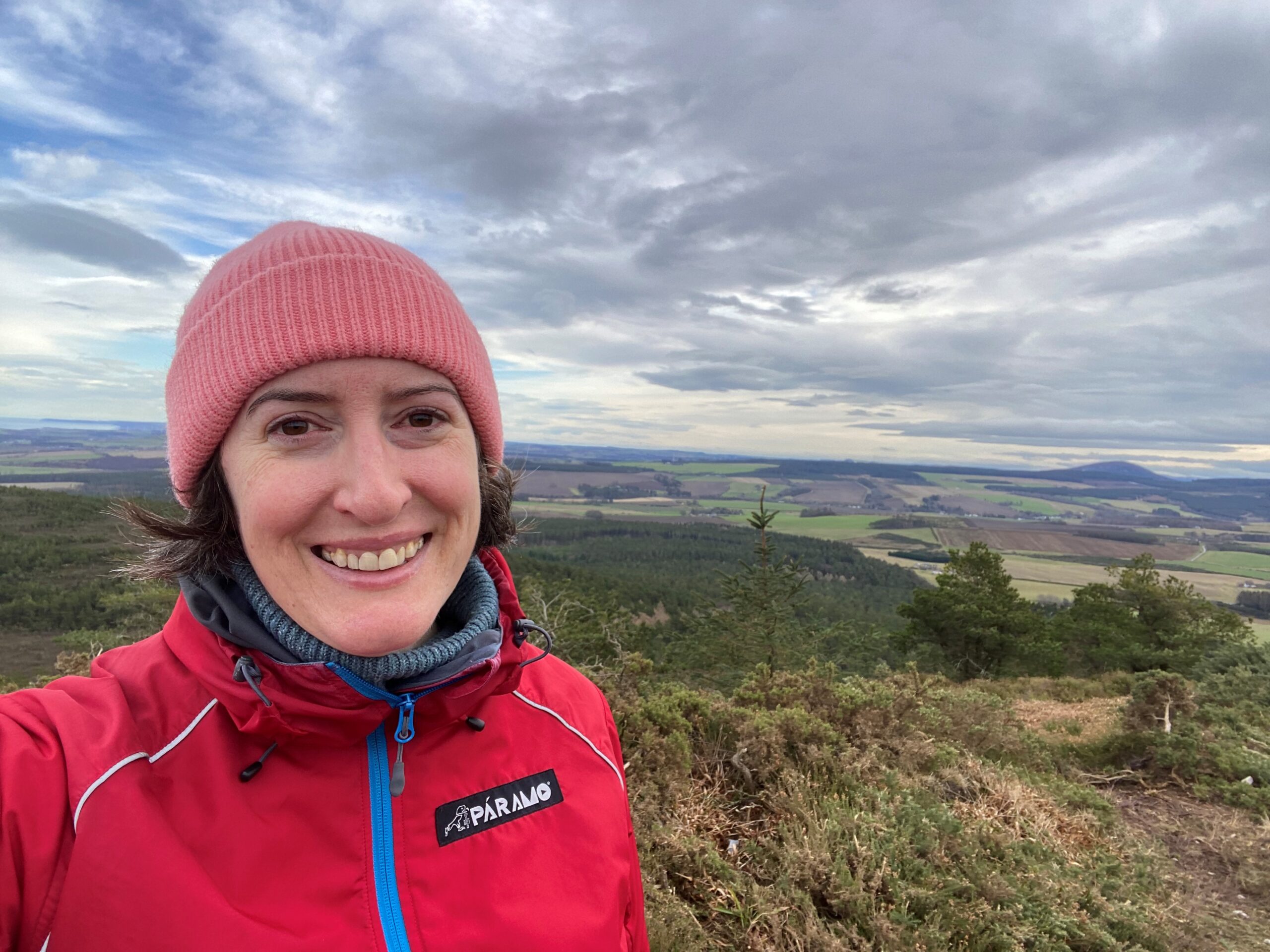
Jessica T Smith is Design Engineering Manager at Scottish and Southern Electricity Networks, and the incoming President of the Geological Society.
Citation: Smith, J. A vibrant future. Geoscientist, 36 (2), 18-19, 2026. DOI: 10.1144/geosci2026-012