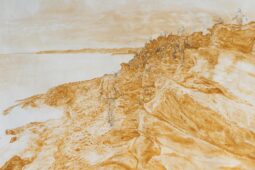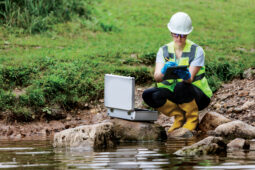
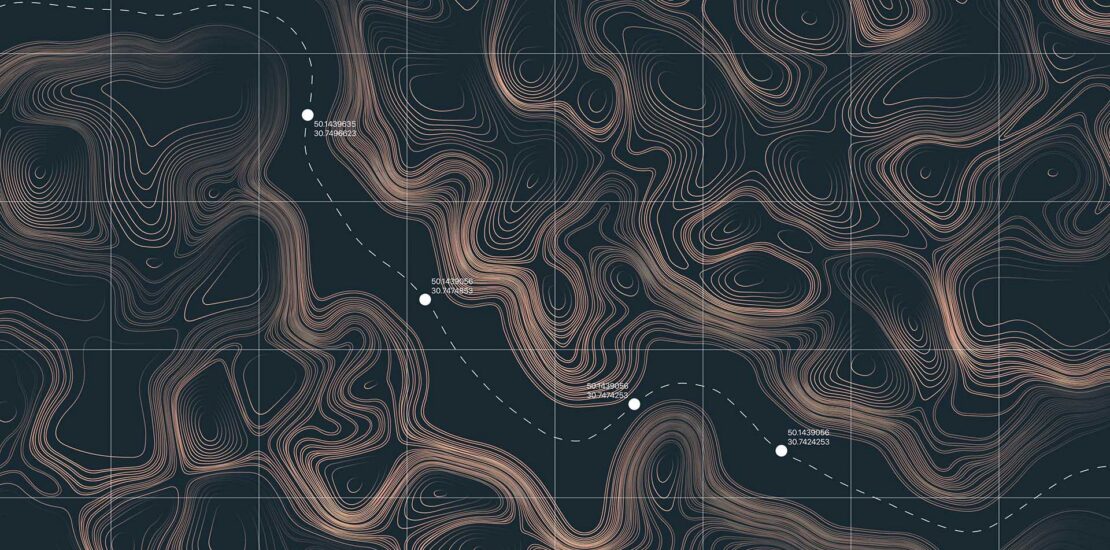
“My non-linear career has not been a weakness; it is a great asset,” says Maria © iStock
I used to think careers were like well-drawn maps—clear contours, obvious routes, the occasional topographical ‘high’. I know quite a few people for whom their career has followed that linear path.
Mine did not.
Looking back, my career resembles a poorly drawn map: no north arrow, scale bar or legend. There were sudden elevation changes and a peat bog that I didn’t recognise until too late. Yet every aspect taught me something, and every detour brought me closer to the kind of geologist I am now.
Just remember: life is full of possibilities. Challenges are part of the journey. The most important thing is to keep going.
The map I thought I had
At school, my map was simple: work hard, study medicine and become a forensic pathologist. Route mapped. Then geology happened. In Year 12, I took geology O-level and fell in love.
Route change #1
I wasn’t studying the correct A-levels required to enrol on a BSc in Exploration and Mining Geology—specifically, maths—but I applied anyway and was accepted at university.
The transition was tough. The learning curve contours were very closely spaced—a lot of maths. I failed my mid-year maths exam, getting just 8%. I worked hard, passed my maths exam at the end of the year, and learned a valuable lesson about resilience.
My career resembles a poorly drawn map: no north arrow, scale bar or legend. There were sudden elevation changes and a peat bog that I didn’t recognise until too late
Going from an all-girls’ school to being the only female on my course meant I quickly learned what it felt like to be female in a male environment. I was expected to take notes rather than take part in labs because my “handwriting was neat”. I couldn’t get safety boots that fitted. I had to wear white abattoir boots underground because they were the only ones small enough. I was smuggled into mines because women were considered bad luck underground. On one field trip, I was expected to cook Christmas dinner for over 30 students and staff because I was the only woman and “must know how”. These experiences made me more determined to succeed.
Route change #2
At the start of my final year, illness forced an unexpected turn. I had to defer for a year. It was my first topographic low.
During my recovery, I applied for work experience and was offered a role with WS Atkins. I spent five months supervising ground investigations at the former East Greenwich Gasworks, now the site of the O2 Arena. I discovered that Tertiary and Quaternary deposits were interesting after all!
What initially felt like catastrophe turned into opportunity. I was offered a graduate role, returned to university with renewed energy, and graduated top of my class (it must have been all those notes I took!)—outperforming all my male peers. A topographic high.
After one year, I won a scholarship to study an MSc in Engineering Geology at Imperial College London, graduating with distinction, and returned to WS Atkins to work on major projects in the UK and overseas. My career was back on the map.
Route change #3
I loved my work, but it would be disingenuous not to acknowledge the sexism I experienced, particularly on site.
One project involved supervising a ground investigation. The site agent was clear he disliked working with women. He was obstructive, confrontational and undermining. I was young, alone and felt isolated.
I kept a detailed site diary. When those diaries were later reviewed by the client, the site agent’s behaviour was deemed unacceptable. He was barred from working on that client’s projects. It was a painful experience, but also formative. I learned the importance of maintaining a detailed site diary and I grew in personal resilience.
After several years at WS Atkins, I moved to a university to work as a research officer while studying part time for a PhD on chalk rock mass behaviour. It was another challenging period. There were moments when I felt like quitting. But I completed my doctorate and gained far more than technical expertise: discipline, analytical rigour, critical thinking, and—unexpectedly—excellent time-management skills.
The experiences on site and in academia made me determined to work for equity within the workplace. It was important to change the narrative from victim to activist, and to improve experiences for others.
During this time, I served on the committee for the Engineering Group of the Geological Society (EGGS). It helped me to keep going. I met kind, passionate colleagues who were supportive. It helped me stay connected to the good aspects of our industry and orientated on my career map.
Then life intervened again.
Route change #4
After having my first child in 2001, I wanted to return to work part time and have access to facilities to express breastmilk. My employer was not supportive. I felt I had to resign. Two more children followed, with health challenges that made returning to work unrealistic.
Motherhood is the most rewarding role I have ever had—and the hardest. I went from competence and confidence to navigating a world where I often felt lost, without a map. These years are described as a “career break”. I reject that term. This was a different career direction, one that developed skills in crisis management, stamina, multi-tasking, empathy, prioritisation and resilience.
During this time away from engineering geology, I lived overseas as a “trailing spouse”. My experience with attempting to combine breastfeeding with working led me to want to support breastfeeding women. I qualified as a breastfeeding counsellor and volunteered on a 24-hour helpline, ran education programmes, assessed workplaces for breastfeeding facilities and edited publications.
Route change #5
In 2016, my 24-year marriage ended. I returned to the UK with my three children, facing homelessness, unemployment, and profound uncertainty. Any map I thought I had was gone. This wasn’t a career detour; it was a seismic rupture. This was my peat bog and definitely the biggest topographic low. But it brought clarity about what was really important—my children.
We started again from scratch. I found administrative work, a home, and schools for my children. Together, we drew a new map. Then, in 2018, I saw a job advertisement for Atkins. Despite a 17-year gap in engineering geology practice, I applied—and was offered the role.
Route change #6
Returning was hard. I rejoined at a junior grade among colleagues much younger than me. Technology had moved faster than geology, and I felt de-skilled. But my confidence grew, and my colleagues were patient and kind.
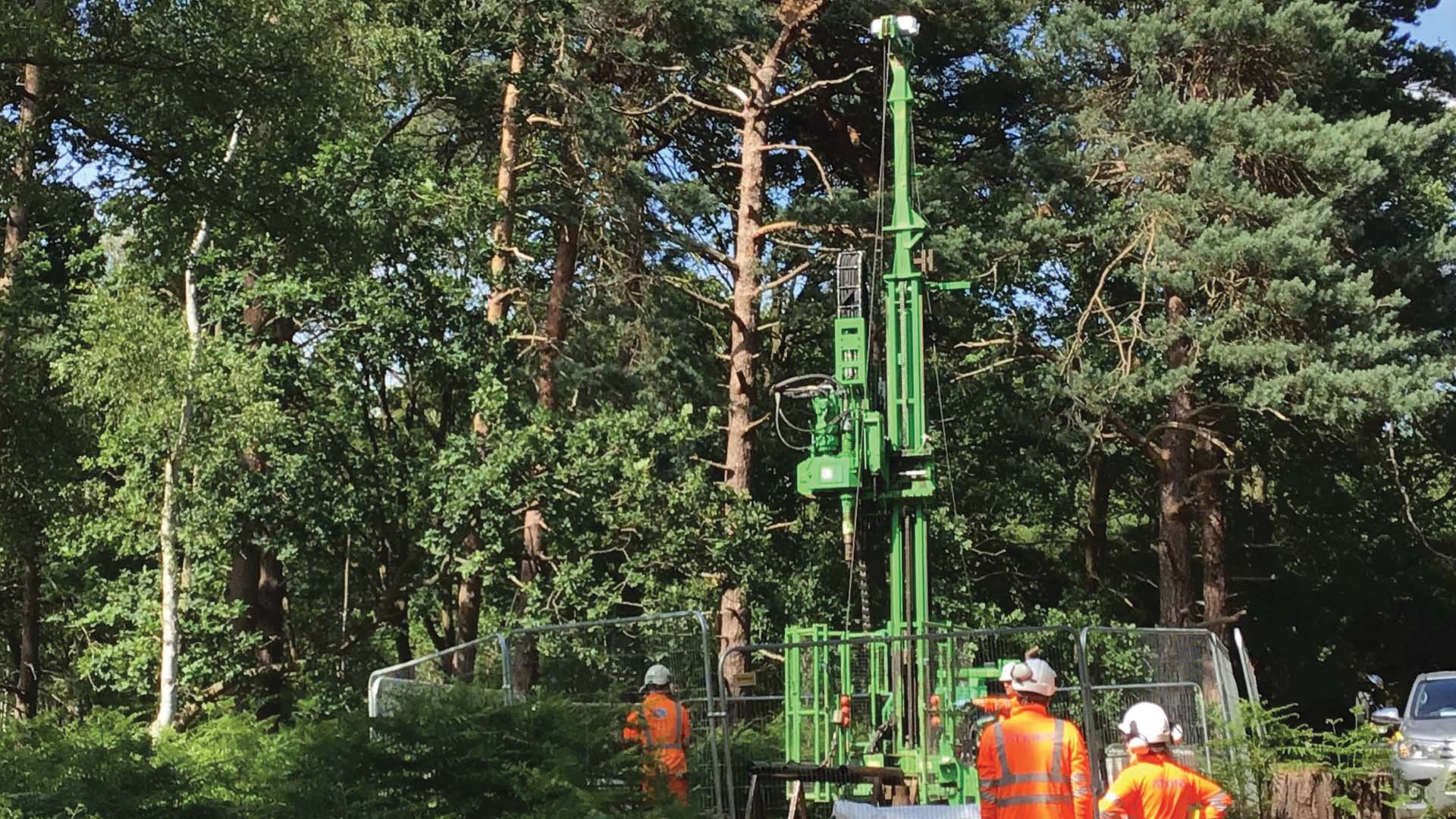
“My role blends technical expertise, people management and supporting others in the industry,” Maria explains © Maria Holloway-Strong
My career has gone from strength to strength. I’ve been promoted multiple times, built and led teams, and become a Chartered Geologist (CGeol) to add to my Chartered Engineer (CEng) status. I am a CEng assessor for the Institute of Materials, Minerals and Mining (IOM3), Chair of the Ground Engineering Advisory Panel for the Construction Industry Research and Information Association (CIRIA), sit on two committees of IOM3 and am a Steering Group Member for the CIRIA Guide Engineering in Chalk. I also have an MSc-level qualification as an expert witness. I am active within AtkinsRéalis in the equality, diversity and inclusion (ED&I) space.
In 2021, I won the Atkins Ground Engineering and Tunnelling ED&I award. In 2025, I won the WISE (Women into Science and Engineering) STEM Returner Award.
Careers, like landscapes, are shaped over time
In 2026, I was recognised as one of the Top 20 women in ground engineering by Ground Engineering magazine.
My role blends technical expertise, people management and supporting others in the industry. Varied experiences, including a PhD, motherhood, and working as a trained counsellor, have strengthened my analytical thinking, time management and interpersonal skills. Professional and personal experiences have motivated my work in ED&I. My non-linear career has shaped me to be a well-rounded, competent engineering geologist with good people skills.
Revisiting the map
My non-linear career has not been a weakness; it is a great asset. Detours expanded my skillset in ways a straight path never could.
Success isn’t just about titles or timelines. It’s about meaning, contribution, and staying connected to your values—even when the map looks messy.
Careers, like landscapes, are shaped over time. It is OK to not have your career perfectly mapped, to have a career map and not stick to the route, and to draw a new map as your life changes.
Sometimes, the most interesting destinations are the ones you never planned to visit.
Author
Dr Maria Holloway-Strong
Principal Engineering Geologist at AtkinsRéalis, UK
This article is published in partnership with the Quarterly Journal of Engineering Geology and Hydrogeology and a thematic collection on the ‘Fookes Meeting for Engineering Geology’.
Access the full collection at lyellcollection.org/topic/collections/FMEG
Citation: Holloway-Strong, M. Contours and curves. Geoscientist, 36 (3), 40-42, 2026. DOI: 10.1144/geosci2026-029