The forgotten geologist
Rediscovered letters reveal how William Samuel Symonds shaped our understanding of Britain’s rocks and fossils, reports Christopher Fear

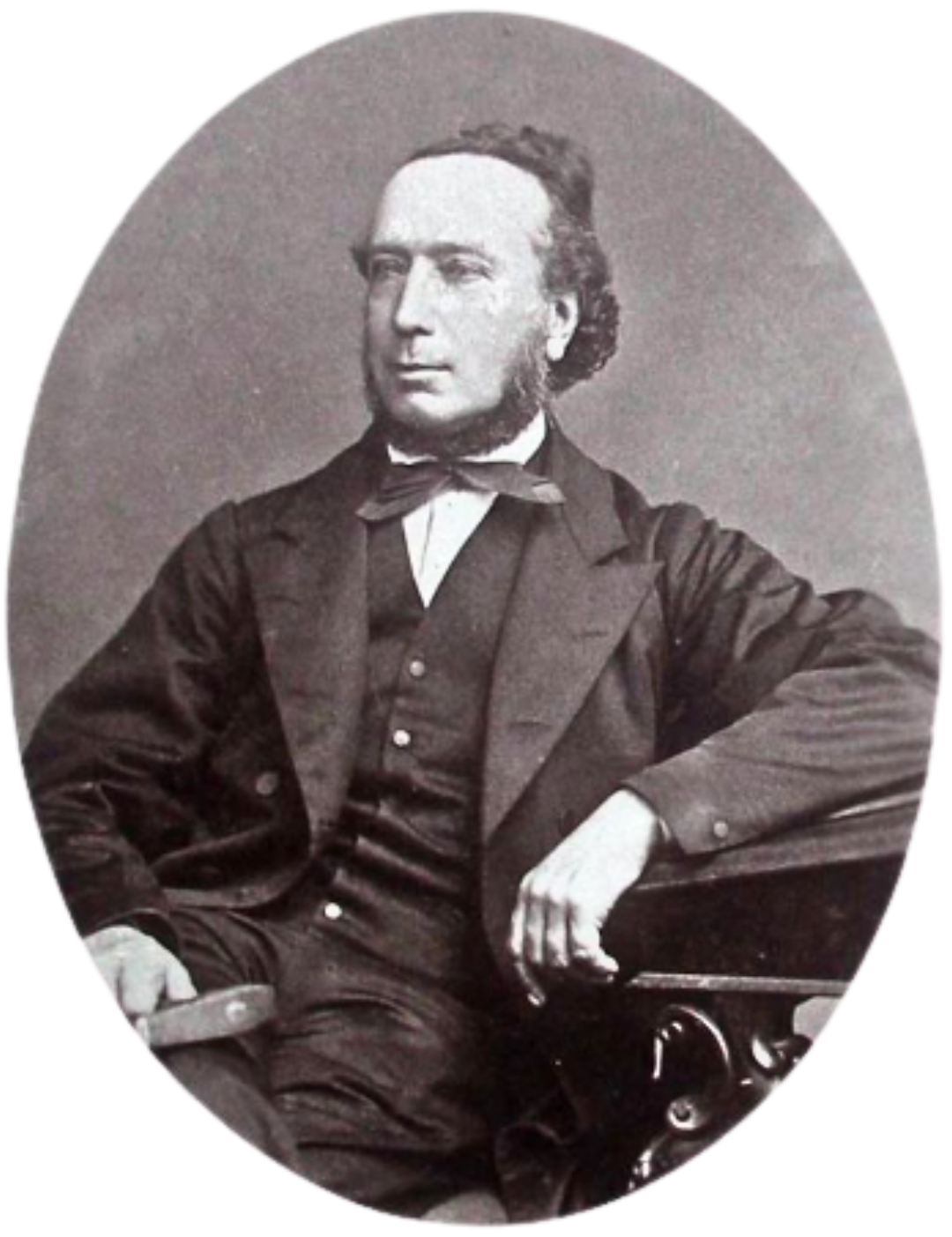
Reverend William Samuel Symonds (© Woolhope Naturalists’ Field Club)
If Charles Lyell, Roderick Murchison and Adam Sedgwick were the “fathers of Victorian geology”, the discipline’s gestation was in the network of local quarrymen, collectors and clergymen who informed their research. One such figure, Reverend William Samuel Symonds, is now largely forgotten, but was almost a household name in his day, publishing four popular geology books and two novels.
My recent rediscovery of five bound volumes of letters from leading figures in Victorian science has shed new light on Symonds’ life, geological work and connections with some of the most influential scientists of his day. The letters were deposited with the Hereford Library in 1939 by Symonds’ grandson, Powell Biddulph Symonds, and had lain apparently unread for over 80 years until I found them during an online search of local archives.
A growing reputation
Born in the Marches of Herefordshire, Symonds developed an interest in geology after meeting naturalist Hugh Edwin Strickland at Cracombe Manor, near Evesham. He learned the discipline in the field, guided by Lyell’s Principles of Geology (1830), starting with the Triassic Keuper Marls of the Severn Valley before moving on to the Malvern Complex and Old Red Sandstone. With fellow clergyman Reverend Thomas Taylor Lewis, Symonds founded the Woolhope Naturalists’ Field Club, which remains active today.
He went on to become an important figure in the study of the region’s geology, particularly across Worcestershire and Herefordshire, as well as Wales, the West Country and northern Scotland. The arrival of the railways created new opportunities for fieldwork, and, with help from a railway engineer, Symonds published a geological section through the Malvern Hills. He also worked with palaeontologist John William Salter on fish fossils from the Ledbury railway cutting and pioneered the study of Devonian fossils in Herefordshire. His name lives on in the Devonian fish Traquairaspis symondsii (Lankester) and Silurian eurypterid Pagea symondsii (Salter).
Distinguished connections
Symonds’ connections extended well beyond the local geological community. He was a friend of Lyell and Murchison, helping to prepare the index for the latter’s Siluria (1854). He was also among the early supporters of Charles Darwin’s work, discussing On the Origin of Species with Lyell at the 1859 British Association meeting in Aberdeen. At the same meeting, Symonds argued that the “reptiliferous sandstone” near Elgin was Triassic, rather than Devonian, drawing on his knowledge of Mesozoic rocks elsewhere in Britain. His interpretation challenged the views of prominent geologists, including Murchison, who continued to defend a Devonian age. Lyell, too, initially questioned the younger age of the rocks, but eventually accepted the Triassic interpretation. Murchison followed in 1867, after further fossil discoveries provided compelling evidence.
Symonds was also likely among the audience at the famous Oxford evolution debate, held on 30 June 1860 at the Oxford University Museum of Natural History, where Thomas Henry Huxley clashed with the Bishop of Oxford over Darwin’s theory of evolution and the idea of shared ancestry between humans and apes. Symonds subsequently expressed strong support for evolution in Old Bones or Notes for Young Naturalists on Recent and Fossil Mammalia (1861), prompting a grateful letter from Darwin.
This remarkable archive sheds new light on Symonds’ previously underappreciated contributions to our science
His acceptance of evolution followed a gradual move away from biblical explanations of the origins and development of life, influenced in part by his correspondence with fellow naturalist McKay John Scobie. Symonds increasingly argued that established ideas should be tested against tangible evidence, and criticised fellow clergymen who tried to reconcile biblical accounts with new geological discoveries.
Symonds’ interest in the antiquity of humankind also developed under Lyell’s influence. He excavated Ice Age fossils and stone tools at King Arthur’s Cave, Herefordshire. When doubts were raised about whether some tools had been planted by workmen, Symonds fiercely defended his local friends: “I have a strong objection to believing that any Herefordshire man would have attempted thus to deceive” (Symonds, 1871). His loyalty to Lyell was equally evident: he served as a pallbearer at the great geologist’s funeral in Westminster Abbey.
The Rector remembered
Declining health left Symonds incapacitated in his early sixties, and he spent his final years with his daughter Hyacinth and her husband, the botanist and geologist Sir Joseph Dalton Hooker, director of Kew Gardens. He died in 1887 and was buried at Pendock.
This remarkable archive of correspondence between some of geology’s greatest minds sheds new light on Symonds’ previously underappreciated contributions to our science.
Author
Dr Christopher Fear, amateur palaeontologist and trustee of the Woolhope Naturalists’ Field Club, Herefordshire, UK
Symonds’ letters, together with correspondence between Darwin, Lyell, Hooker and Murchison held in various archives, form the basis of a recently published biography on the Rector of Pendock (Fear, 2026).
Further reading
- Fear, C. (2026) Fossils & Faith: The Victorian Fight for Science and the Surprising Story of a Worcestershire Rector. Logaston Press: Eardisley. 256 pp.
- Lyell, C. (1830) Principles of geology: Being an attempt to explain the former changes of the Earth’s surface, by reference to causes now in operation. John Murray: London. 511 pp.
- Murchison, R.I. (1839) The Silurian System. John Murray: London. 768 pp.
- Symonds, W. (1861) Old Bones or Notes for Young Naturalists on Recent and Fossil Mammalia. Robert Hardwicke: London. 127 pp.
- Symonds, W. (1871) On the contents of a hyena’s den on the Great Doward, Whitchurch, Ross. The Geological Magazine, 8 (88), p. 436-7.