


Fields of research: Whose decision is it anyway?
Science is the pursuit of knowledge, but it does not exist in isolation; it is shaped by wider societal, political and historical context. Drawing on examples from field research, Freya Sykes explores how such contexts may shape our intellectual goals more than we realise.

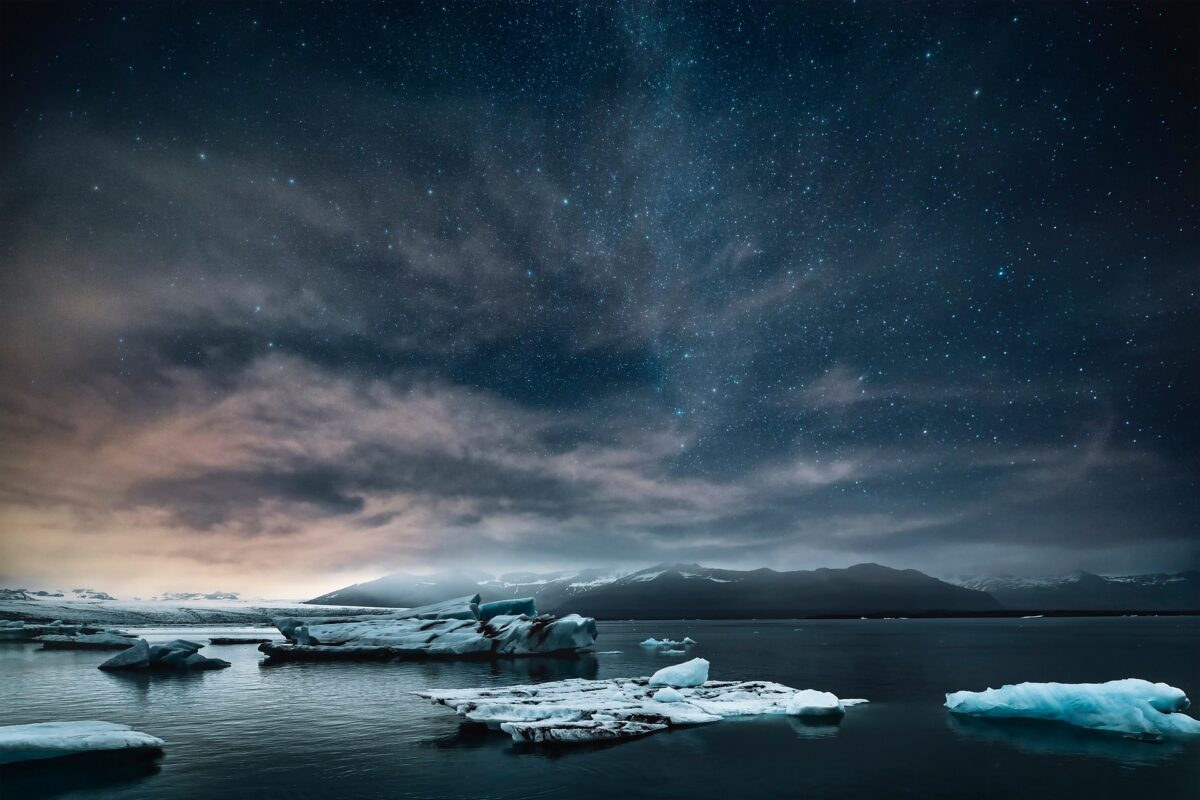
Image by Enrique from Pixabay
Why do we choose the fields that we do? Like many geoscientists, I was drawn in by a love of the outdoors, and a drive to better understand the landscapes around me. Glacial geomorphology became my first academic love; it was a revelatory experience to discover that, with the right knowledge, a good eye, and a bit of imagination, the hills and crags around my home could be read like a book, unveiling tens of thousands of years of Earth history.
A career in the geosciences seemed, therefore, the obvious continuation. But while that passion stemmed from a place of genuine intellectual curiosity, it was also grounded in a love for exploration and wild adventures. It would be disingenuous to suggest that the promise of expeditions in the world’s far-flung corners was not a highly motivating factor in my choice of a fieldwork-heavy subject. But what does this mean for the geosciences, if our motivations and priorities extend beyond pure scientific pursuit?
Soft power
The modern discipline of geoscience can be traced back to the scientific revolutions of the Age of Enlightenment—an intellectual and cultural movement in Europe and North America during the 17th and 18th centuries. Also referred to as the ‘Age of Reason’, it signalled the shift from religious dominance in culture and politics, to Newtonian science and industrialisation. It was during this period that modern scientific enquiry emerged, and with it the natural sciences, and geoscience, as we would recognise them today. While we are indebted to the discoveries of this period, it is also inescapable that development of the geosciences was tightly coupled to the wider European imperial project. Much of the research conducted during the Age of Enlightenment was carried out by Western scientists exploring ‘foreign’ lands with the support of colonial activities. Even today, field campaigns in geoscience serve as a way for countries to exert soft power on a global stage and demonstrate geopolitical dominance.
it is inescapable that development of the geosciences was tightly coupled to the wider European imperial project
In the Arctic and Antarctic, the political motive can be particularly strong because successful field campaigns confer global visibility and prestige, and legitimise the presence of a nation in an area they may not traditionally have established sovereignty. For example, the positioning by China as a ‘near-Arctic state’ (Morgunblaðið, 2019) and its increasing scientific activities in the Arctic (Funaiole et al., 2023) have been interpreted by some as a move to establish access to the region and its resources, especially as melting sea ice opens previously inaccessible trade routes and natural resources.
In the southern hemisphere, France has been reengaging with its ailing Antarctic programme at Terre Adélie due to perceived threats from Russian activities, and a desire to establish Antarctic sovereignty and identity (Martin-Nielsen, 2021). Despite widespread cuts for climate research across US institutions, the White House’s 2027 budget has included funding for a new Antarctic icebreaker for polar research under the guise of ‘restoring American maritime dominance’ (Mervis, 2026). In both cases, the focus on polar science goes beyond furthering scientific progress and understanding; instead, researchers find their fieldwork entangled in the web of global geopolitics.
Bias and gatekeeping
The Romantic movement was an artistic, literary, and intellectual movement from the late 18th to early 19th Century that developed, in part, as a reaction against the cold, scientific rationality of the Enlightenment and the environmentally damaging, mechanical rigidity of the Industrial Revolution. The movement was obsessed with the idea of sublime and untouched ‘wilderness’. Unconsciously, this legacy lives on in our approach to value within the geosciences, feeding into the perception that remote, wild, and less ‘human’ landscapes are more exciting and prestigious.
This perception is not helped by the media, which prefers the compelling image of the swashbuckling Indiana Jones style explorer, over less aesthetic scenes in the lab or at a computer. Anecdotally, colleagues in Scandinavia and elsewhere have struggled to secure grants for local field projects, especially ones centred on long-term monitoring. Although essential for our understanding of environmental processes, they are less compelling for funders (Lindenmayer, 2018). ‘Wild’ and exotic field sites capture the imagination of both scientists and the public and in doing so generate more interest, more money, and consequentially, more research.
An unfortunate further reality contributing to bias against certain research sites is that the risk to scientists in unstable social and political climates can result in scientific ‘no-go’ zones (Lid Krumsvik, 2026). Although proposals for marine sampling in scientifically under-explored areas like the Arabian Gulf and the Horn of Africa can be ranked very highly, the risk of piracy may be considered too high for organisations coordinating marine research vessels to take on the expedition (Salopek, 2013). Even in regions traditionally perceived as ‘safe’, field scientists can be at risk of harassment, abuse and assault, especially if they are from marginalised or minority groups (Viglione, 2020). The unequal experience of harassment in the field by different social groups works to gatekeep certain research destinations (Cronin et al., 2024), diminishing potentially very exciting and valuable research projects.
Deeply entangled
The histories of polar exploration and territorial ambition demonstrate that science has never advanced in a vacuum. While we may like to consider ourselves objective and impartial, it is impossible to fully disentangle our scientific goals and values from their political, social, and personal context—and it is disingenuous to pretend otherwise. This does not always have to be a bad thing. Maybe as a child my initial fascination with cold and icy landscapes was driven more by a love of stories of Arctic and Antarctic exploration than a desire for scientific understanding. But with time, my fascination has transformed into a very real investment in polar research.
it is impossible to fully disentangle our scientific goals and values from their political, social, and personal context—and it is disingenuous to pretend otherwise
Many geoscientists can probably tell similar personal stories. We must, therefore, acknowledge that our research is influenced by factors beyond just scientific value—factors that can and will dictate research design and the progress of our discipline.
Our research curiosity will always be driven by our personal passions, which grow from so much more than just science. Disentangling modern research priorities from their historical and cultural contexts is a considerable task, yet it is essential for geoscientists to interrogate why certain places and questions attract research attention. When planning our next project, we owe it to scientific integrity to take a moment to ask ourselves: Why here?
Author
Freya E Sykes, iC3 Centre for ice, Cryosphere, Carbon and Climate, Department of Geosciences, UiT The Arctic University of Norway, Norway
Further Reading
- Cronin, M.R. et al. (2024) Beyond reporting: proactive strategies for safer scientific fieldwork. Trends in Ecology & Evolution 39(3); 213–216; org/10.1016/j.tree.2024.01.003
- Funaiole, M.P. et al. (2023) Frozen Frontiers: China’s Great Power Ambitions in the Polar Regions. Center for Strategic and International Studies (CSIS), Washington, USA, 18 April; csis.org/hiddenreach/china-polar-research-facility/ (Accessed: 18 March 2026)
- Lid Krumsvik, S. et al. (2026) Havforskingsinstituttets Forskingsskip ‘dr. Fridtjof Nansen’ Trekk Seg ut av Oman. Norsk rikskringkasting (NRK), Norway, 3 March; no/vestland/havforskingsinstituttets-forskingsskip-_dr.-fridtjof-nansen_-trekk-seg-ut-av-oman-1.17792596 (Accessed: 18 March 2026)
- Lindenmayer, D. (2018) Why is long-term ecological research and monitoring so hard to do? (and what can be done about it). Australian Zoologist 39(4), 576–580; org/10.7882/AZ.2017.018
- Martin-Nielsen, J. (2021) Undecided dreams: France in the Antarctic, 1840–2021. Polar Record 57, e32; org/10.1017/S0032247421000140
- Mervis, J. (2026) Trump seeks to jump-start long-planned Antarctic research icebreaker. Science News, 13 April; doi:org/10.1126/science.zg53ehx
- Morgunblaðið (2019) Morgunblaðið publishes a signed article by ambassador Jin Zhijian entitled China is an important force for development in the Arctic (2019). Ministry of Foreign Affairs People’s Republic of China, 15 October; gov.cn/eng/xw/zwbd/202405/t20240530_11362573.html (Accessed: 18 March 2026)
- Salopek, P. (2013) A hidden victim of Somali pirates. National Geographic, 25 April; com/science/article/130425-pirates-somalia-indian-ocean-seafloor-drilling-climate-change-science (Accessed: 18 March 2026)
- Viglione, G. (2020) Racism and harassment are common in field research—scientists are speaking up. Nature 585, 15-16; org/10.1038/d41586-020-02328-y


