Michael Howarth (1932-2024)
A globally renowned ammonite worker who preferred to keep a low profile
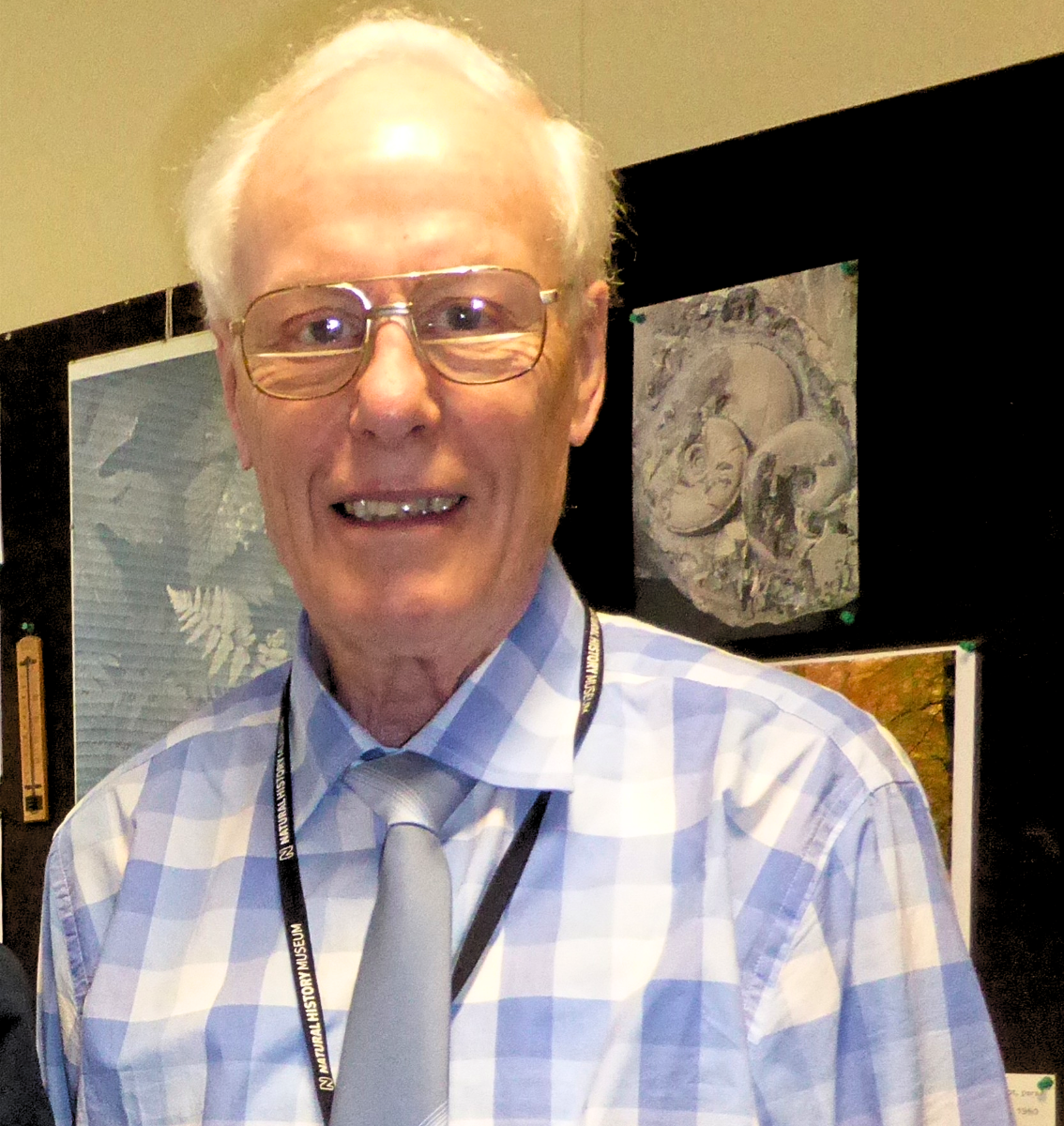
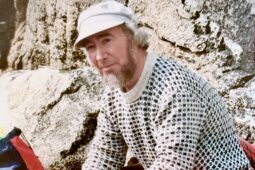
Michael Howarth (© Robert Chandler)
Michael Howarth was born on 21 January 1932 in Nuneaton, Warwickshire. From the local grammar school, he began studying at the University of Manchester in 1950, graduating in geology three years later. Michael then moved to the University of Cambridge where his PhD on amaltheid ammonites was supervised by W.J. Arkell.
Ammonite enthusiast
Michael gained his PhD in 1956, having already published on ammonites from the Middle Lias of Yorkshire, quickly followed by the faunas from Raasay and Dorset, leading to a monograph on the Amaltheidae (1958). His expertise on Upper Pliensbachian and Early Toarcian ammonites was a fundamental contribution to the still-relevant Liassic ammonite zones and subzones of the north-west European Province (1961).
Shortly after his appointment to what is now the Natural History Museum (NHM), London, Michael identified and published on ammonites from Antarctica and Angola. 30 years later, in 1995, the Howarth glacier on James Ross Island was named in recognition of this work.
Michael’s work was always thorough, as evidenced by his meticulous descriptions of sections and systematic descriptions of numerous ammonite faunas. His taxonomy was rather conservative and whilst he was initially slow to accept sexual dimorphism in ammonites, he later embraced it. Ammonite biohorizons are quite apparent in many of his publications, especially so in his description of the Bairstow Collection from the Yorkshire Lias, even though he did not recognise them.
The Howarth glacier on James Ross Island was named in recognition of his work
Services to science
Michael became Deputy Keeper in Palaeontology at the NHM until retirement in 1992. For many years, he was editor of the Bulletin of the British Museum (Natural History (Geology Series)) where his monographic studies of dactylioceratid ammonites were published. He was also Treasurer of the Palaeontographical Society (1958-1985) and Secretary of the International Trust for Zoological Nomenclature (1986-2005). In 2002, Michael was awarded the Phillips Medal by the Yorkshire Geological Society for his contributions to Yorkshire geology.
Retirement provided more research time, much of which was spent revising the Jurassic and Cretaceous ammonite volumes of the Treatise on Invertebrate Paleontology, which after 2015 became his sole project until completion of the last part (posthumously) in 2026.
Life beyond ammonites
In 1959, Michael married Valerie Dedman, who died in 1967. They had two daughters, Kathryn and Frances, who both sadly died recently. In 1996, Michael married Elena Popa, a Romanian palaeontologist. His step-grandson, Christopher Normann, says Michael confided that marrying Elena was the best thing he had ever done, with Elena’s bubbly personality complementing Michael’s quieter persona. Michael died on 10 February 2024.
By John C.W. Cope