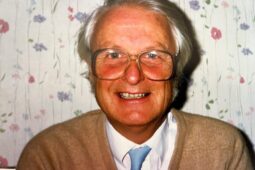
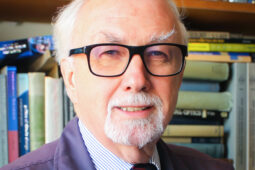
Max Barton (1934-2026)
Engineering geologist whose enthusiasm for the cliffs at Highcliffe and Barton-on-Sea inspired generations of engineers
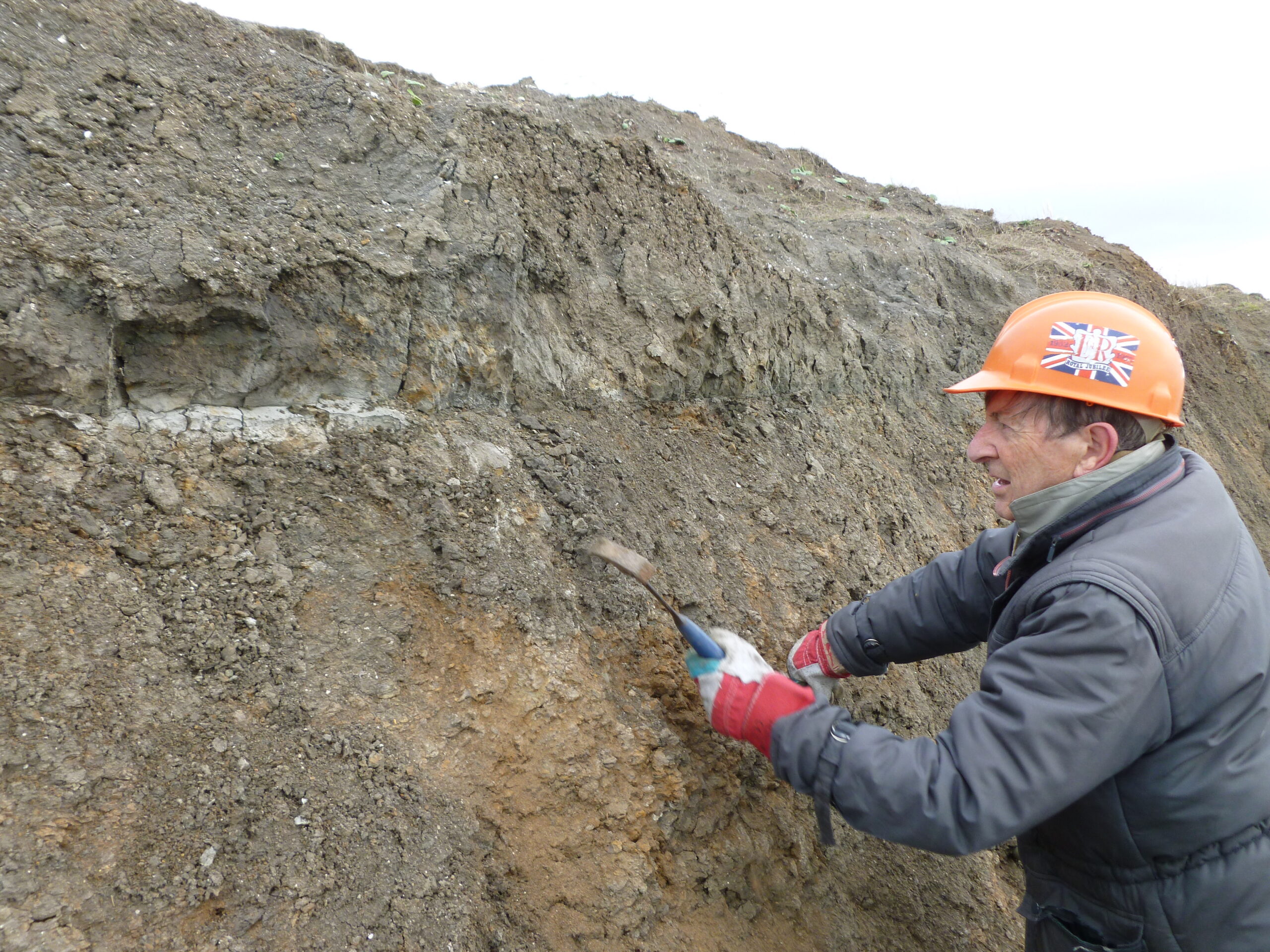
Max Barton (© Joel Smethurst)
Max Edrich Barton read geology at King’s College London (1953-56), then moved to the University of Birmingham for an MSc in Quaternary studies and a PhD in igneous petrology (1960), before spending three years in site investigation—then one of only three geologists in the industry in the UK. A diploma in soil mechanics at Imperial College London followed, before he joined the University of Southampton as a lecturer in 1964, becoming Senior Lecturer in 1988. Max worked for more than half a century as an engineering geologist in the Department of Civil Engineering at the University of Southampton; he officially retired in 1999, but ‘retirement’ in Max’s case meant continuing to research, consult, teach and supervise until he left the department at the age of 88.
Christchurch Bay
Max’s lifelong work was observing the coast between Highcliffe and Barton-on-Sea. From the 1960s, he published a long series of papers on the Barton Beds, many in the Quarterly Journal of Engineering Geology, describing the stratigraphy and mechanics of the retreating cliffs. His central contribution was to show, through years of field observation, instrumentation, and laboratory testing, how shear surfaces develop and propagate within the Barton Clay—work that gave a valuable field-based understanding of progressive failure in stiff over-consolidated clays. He was proud of this research, which found its way into the undergraduate teaching syllabus. Many students knew his name from the literature before they met him and were disappointed to learn the Barton Beds were not named after him (although many would argue they should be).
Alongside this, he worked on locked sands: dense, diagenetically altered sands whose behaviour defied conventional classification. Max also investigated the ground beneath Winchester Cathedral and Southampton’s Bargate Shopping Centre, and published on the wider geology of the Midlands and Isle of Wight. He even studied the seabed at the Titanic wreck site. In all, he authored or co-authored more than 160 papers and reports.
Max loved geology and passed that on to everyone who had the pleasure of working with him
Field first
Max was a scholar of the old school: enthusiastic in pursuit of knowledge, meticulous in detail, and quietly wary of computer models. He trusted what could be observed and measured.
A Chartered Geologist and Fellow of the Geological Society since 1957, he served on the Engineering Group committee (1985-88) as meetings coordinator and as the Society’s Engineering Geology Special Publications Editor (1997-2000). He was also a member of the Quaternary Research Association, the Geologists’ Association and the British Geotechnical Association.
Max was always happiest in the field, a fixture at the Engineering Group’s field trips and Regional Meetings. Colleagues and students remember him in his eighties running up steep exposures with ease, hanging off the face, hammer in hand, while a group below silently willed him not to fall. He never did.
Gentle mischief
Behind the quiet manner was a subtle, mischievous humour. Field trips came with a strict itinerary, carefully calculated timings, and an essential stop at a cafe or pub. He was unfailingly kind to his students and colleagues, and always generous with his time. Max never lost the boyish enthusiasm of someone who has just found something interesting in a cliff face. He loved geology without reservation, and passed that love on to everyone who had the pleasure of working with him.
By Peter Redshaw, Sally Brown, Joel Smethurst, Eddie Bromhead, William Powrie and Robert Nicholls