“The sense of community is what I love most”
Megan Jacobs is a doctoral researcher in palaeontolgoy at the University of Portsmouth and managing partner of Wight Coast Fossils
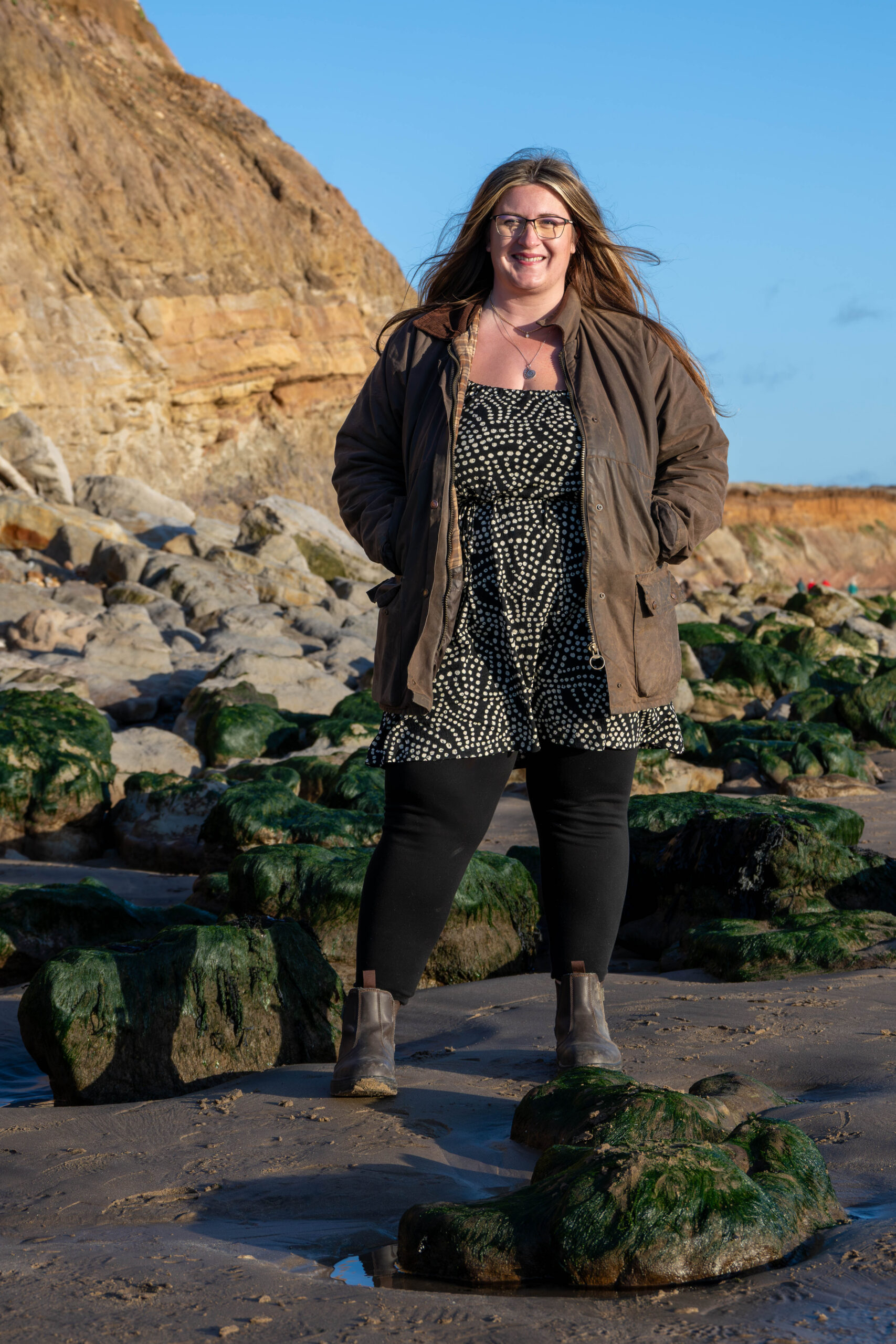
Megan Jacobs (© Clare Jacobs)
What are you currently working on?
Although I have lots of ongoing projects, my main focus is finishing PhD research on dinosaur gastroliths, or stomach stones, from the Wessex Formation on the Isle of Wight, UK. I’m using the types of rocks dinosaurs swallowed to identify where the dinosaurs may have found them, which can tell us a surprising amount about the landscape they were living in 130 million years ago. It’s amazing how much information you can get from what, at first glance, looks like nothing more than a box of pebbles!
What’s a typical day for you?
The nice thing about what I do is that no two days are the same. Sometimes I’m taking people on guided fossil walks along the Isle of Wight coastline and other days I’m in the field collecting data for my PhD. A lot of my time is also spent sitting at a computer writing up research. That’s probably the part people might think of as the ‘boring’ side of palaeontology, and sometimes it can be incredibly tedious! But there’s something really satisfying about seeing all of that work gradually come together and publishing a paper at the end of it.
What’s the best thing about your work?
The people really are what make it so special; I’m very lucky to have so many friends who share my passion for fossils. It’s such a diverse group of fossil enthusiasts, professional collectors and academics, who bring so many incredible stories, experiences and plenty of laughs along the way. That sense of community is one of the things I love most about palaeontology.
Have you encountered challenges along the way?
Imposter syndrome is something I think many academics have experienced at some point. When you’re constantly surrounded by people with many more years of experience than you, it can be quite intimidating. For me, a big turning point was realising that I didn’t have to be the most experienced person in the room to have something valuable to say. I could stand up for myself, argue my ideas, and trust my own observations. Once I started doing that, it really changed how I approached my research and saw myself as a scientist.
What advice would you give to someone hoping to work in your field?
Get to know rocks and spend as much time as you can looking at fossils in the real world—you learn so much from handling specimens and seeing where they come from. Allow yourself to deep dive into topics that grab your interest by reading books, papers and online resources, or visiting museums. Volunteer if you can too; it’s a great way to meet people, gain experience and get a feel for different sides of palaeontology to figure out what you enjoy most, which will naturally lead you towards the area you want to pursue.