“Many jobs are dead boring; this one isn’t!”
Dr David Giles is Senior Consultant at Geotechnical Consulting Group (GCG) and the latest recipient of the Society’s Glossop Medal
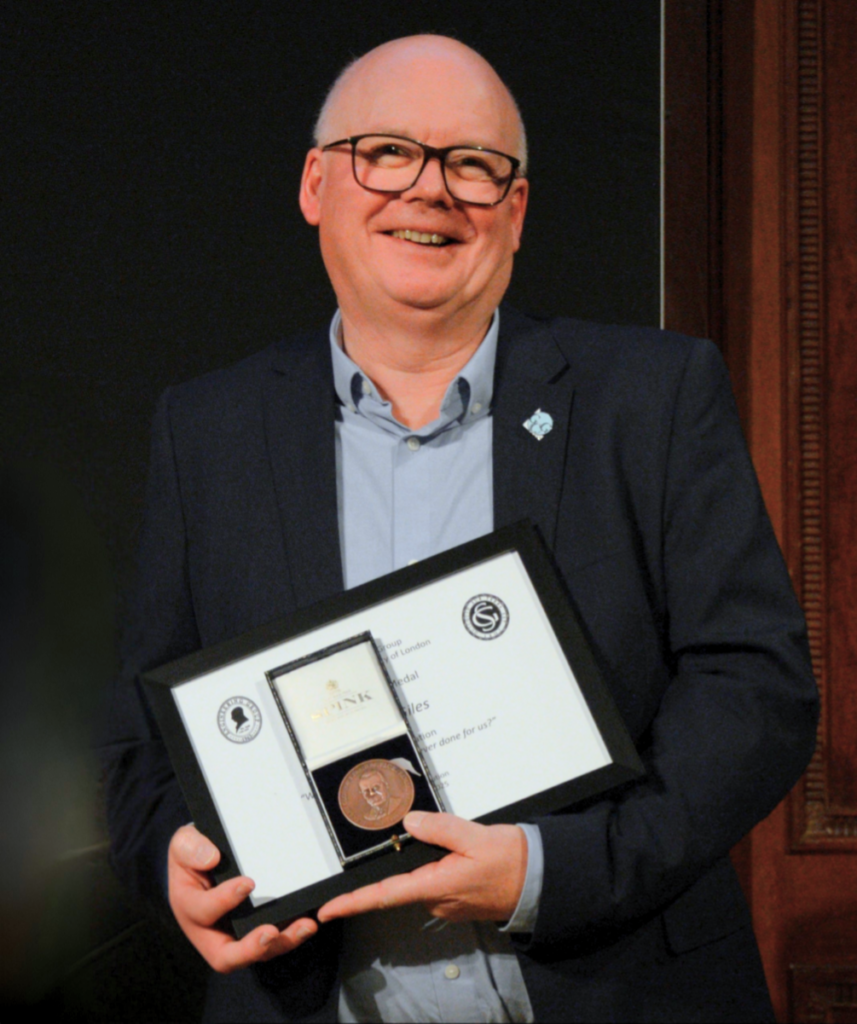
© Stephanie Boffey-Rawlings
What is a typical day for you?
My workload is quite varied providing geological support for the vast array of projects that GCG is involved with and providing opinions in legal disputes for a variety of engineering geology problems.
What interesting projects have you worked on?
Currently, I am involved in a large site assessment for new solar panel farms across Serbia, distributed in differing geological terrains with associated hazards. From knowing very little about Balkan geology, I have learnt about some very interesting and complex geological settings, such as ophiolites and zeolite mineralisation.
I have also enjoyed leading undergraduate and postgraduate engineering geology and geohazards field trips to France, covering the French Alps, Provence and the Chaîne des Puys volcanoes. It was a wonderful checklist of rocks, landslides, tunnels, dams and Quaternary glacial deposits!
What have you learned moving between academia and consultancy?
In academia you build an enormous bank of geological trivia – little snippets of information from lectures, field trips and student projects that you supervise. I didn’t have an outlet for this geological background until moving to industry where I use it for desk studies and geohazard assessments, highlighting the geo-related issues that may need to be addressed during project planning.
What inspired you to follow this career path?
It all started with a visit to the Palaeolithic flint mines at Grimes Graves, Norfolk. This triggered a geological interest that ultimately led me to hearing Pete McDowell’s sales pitch for BSc Engineering Geology and Geotechnics at Portsmouth Polytechnic – once you had heard that, there was no turning back! The variety of subjects studied and projects that you could be involved in was an exciting prospect.
Have you faced any challenges?
When I was a student and later a staff member, the Engineering Geology and Geotechnics degree programme was set by lecturers who understood its vocational and hybrid nature. With a mix of short and long courses, field trips and labs there were long contact hours, trips out of term time and extended projects. But when college degree programmes had to be repackaged into a one-size-fits-all model, it was a challenge to work out what to cut from the course. I was taught how to survey, mix a concrete batch, repair an ohmmeter, prospect in an African craton, explore for groundwater and write a Fortran programme using insights from other subjects and teaching departments, all of which became impractical and undeliverable with unitisation. We seem to have forgotten that multidisciplinary degrees should have a place in a varied curriculum.
Has receiving the Glossop Medal influenced your next career move?
From the feedback I received after giving the Glossop Lecture it is evident there is still much to do in the engineering geology community to spread the word about the significance of the Quaternary to ground engineering. I intend to carry on supporting the initiative developed by the Engineering Group and Quaternary Research Association to develop field training programmes on Quaternary Engineering Geology to support early career geoscientists.
What advice would you give to someone hoping to work in your field?
Many jobs are dead boring; this one isn’t! In engineering geology, the variety of geological settings, hazards and geotechnical challenges, as well as the data types, modelling and analysis are constantly different, meaning projects are never dull or repetitive. It is truly a holistic discipline and rewarding career.