


A Field Guide to Fossils & Geology of the Isle of Wight
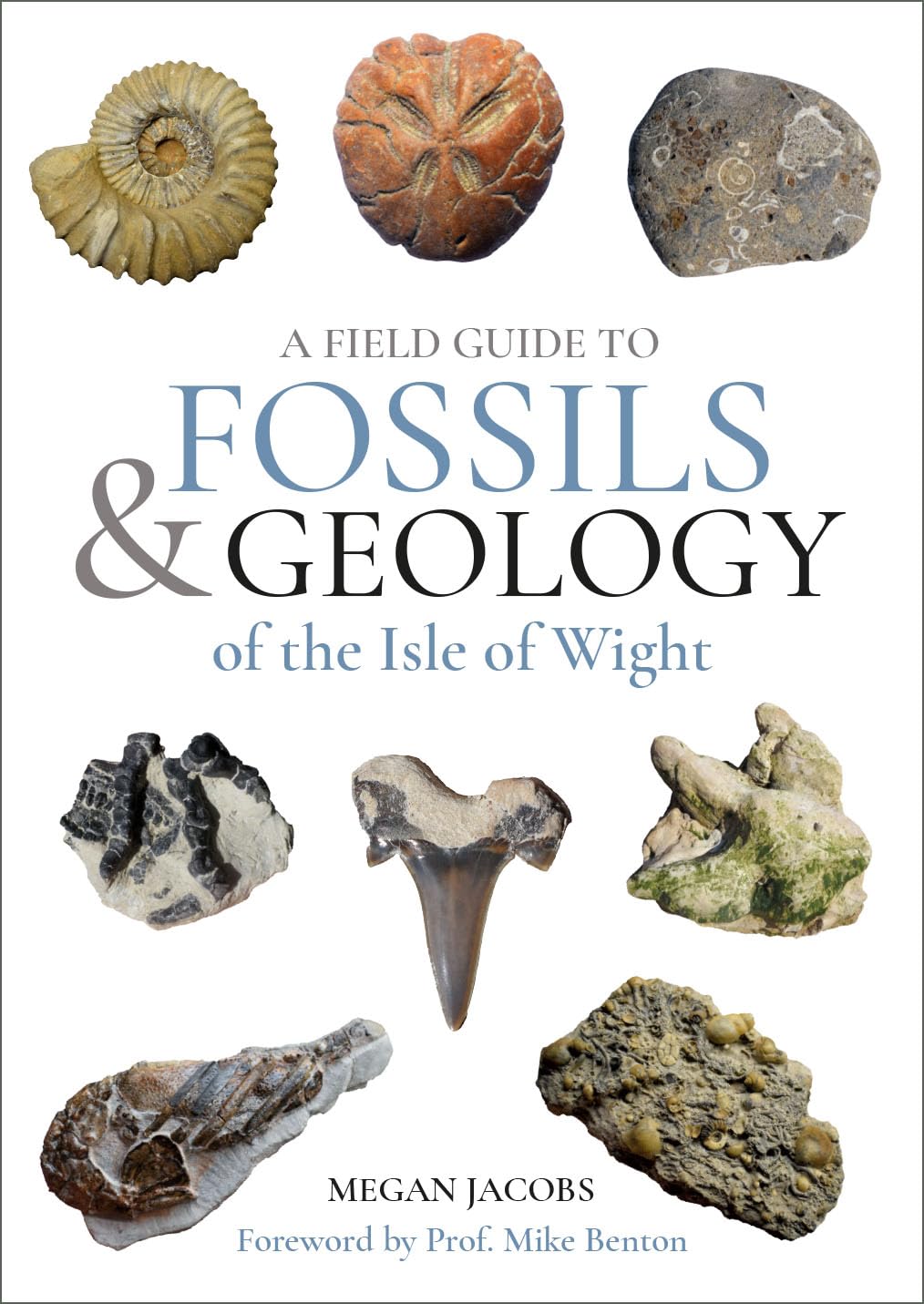
The Isle of Wight’s rich fossil record and varied coastal exposures have long attracted palaeontologists, geologists, amateur fossil hunters, and curious visitors alike. Megan Jacobs’ field guide is an excellent reference companion for anyone intending to explore the Isle.
The book delivers well on both elements of its title, with detailed coverage of the island’s fossils and clear explanations of the ancient environments in which the organisms were deposited and preserved. The balance between the two is well struck, with neither aspect feeling secondary to the other, forming a coherent and well-structured read.
The opening chapters introduce the history of geology and palaeontology, including key figures such as Richard Owen and Gideon Mantell, as well as touching on the importance of the Isle of Wight Museum for the island’s collections. The book then moves on to the island’s geological structure and introduces key geological concepts; sections on large scale structures, faults and landslips help set the scene before exploring the Cretaceous, Paleogene and Quaternary successions in turn. A large section of the book is dedicated to fossil identification, showcasing the variety of common fossils to be found, as well as some of the rare or more impressive specimens.
The breadth of coverage is welcome, encompassing the dinosaur-bearing floodplain deposits of the Wessex Formation, the lagoonal deposits of the Vectis Formation, and the island’s marine successions. Quaternary deposits and evidence of ancient humans extends the scope further, conveying the variety of environments preserved within the island’s geological record.
A particular strength of the book is the quality of the visual material, with excellent photographs of locations, outcrops, and fossils supporting the geological descriptions and identification sections, helping readers connect the material on the page with what they might encounter in the field. Diagrams are well designed, clear, and particularly useful for explaining geological concepts that may not be immediately intuitive for general readers or those new to the subject, such as the figures showing Milankovitch cycles and the formation and preservation of dinosaur footprints and casts.
Practical advice on safety and responsible, ethical collecting accompanies guidance on localities. The quality and clarity of the maps, showing locations, main roads and parking, along with the underlying bedrock geology is to be commended. Useful details about access to the sites and local amenities are also very welcome additions.
Aimed at a general readership, the guide should appeal particularly to interested visitors, fossil collectors, and students seeking an introduction to the island. However, there is more than enough detail and breadth to make it a handy reference for readers with a geological background seeking to familiarise themselves with the island’s geology and fossil record.
Review by Kane Coxon
DETAILS:
BY: Megan Jacobs (2026) Medina Publishing, 304 pp.
ISBN: 9781916866218
PRICE: £22.50, available from Geoscientist’s bookshop


