Society and community updates Spring 2026

© iStock
President’s Day and Society Awards 2026
President’s Day is on Wednesday 17 June. There will be an awards ceremony with the formal presentation of the Society’s 2026 Medals, Awards and Funds by the President, followed by talks from the Wollaston, Lyell, Murchison and William Smith Medal recipients. Details on timings and how to register for President’s Day are available at geolsoc.org/events.
Council Meetings and AGM dates
- Council meetings 2026: 4 March, 13 May, 8 July, 14 October, 2 December
- Council meetings 2027 (tentative): 3 March, 5 May, 7 July, 6 October, 1 December
- Annual General Meeting 2026: 17 June 11:00-12:30 (GMT+1), with further details to be announced via the Society’s e-newsletter, website and summer issue of Geoscientist.
Vote in the 2026 ballot for Treasurer Elect and Vice President, Foreign & External Affairs
The preliminary ballot for the roles will run from 2 to 31 March. Information on the candidates and how to vote is available via: geolsoc.org.uk/about-us/governance/council/council-elections. Members eligible to vote will be contacted directly via an independent ballot provider with instructions for how to vote. If you do not receive an email, please check your spam email folder. Those without a registered email address will receive instructions on how to vote by post. If you do not receive your ballot by 9 March or have issues with casting your vote, please visit the ballot provider’s direct link: cesvotes.com/geosoc26. For further questions, contact secretary@geolsoc.org.uk
2026 Society Awards
We are delighted to announce the Geological Society’s 2026 Medals, Awards and Funds winners and offer our utmost congratulations to this year’s deserving recipients:
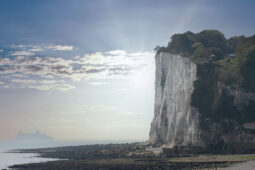
- Prof Rory Mortimore (ChalkRock Ltd/University of Brighton, UK): Wollaston Medal
- Prof Margaret Collinson (Royal Holloway, University of London, UK): Lyell Medal
- Prof Peter Cawood (Monash University, Australia): Murchison Medal
- Dr Christopher Morley (Consultant, UK): William Smith Medal
- Prof Andy Gale (University of Portsmouth, UK): Prestwich Medal
- Prof David J A Evans (Durham University, UK): Dewey Medal
- Ron Daniel Lions (Denergy, St. Lucia): Coke Medal
- Prof Georg Zellmer (Universität Bonn, Germany): Coke Medal
- Prof Silvia Peppoloni (Istituto Nazionale di Geofisica e Vulcanologia, Italy): Distinguished Service Award
- Luisa Hendry (Scot Rock Walks – Scottish Geology Tours, UK): R H Worth Medal
- Dr Jakob Vinther (University of Bristol, UK): Bigsby Medal
- Dr Nemi Walding (Kelpie Geoscience Limited, UK): Wollaston Fund
- Dr Elias Rugen (University of Southampton, UK): Lyell Fund
- Dr Martin Li (Imperial College London, UK): William Smith Fund
- Dr Alice Paine (University of Basel, Switzerland): President’s Award
- Dr Emma Watts (Swansea University, UK): President’s Award
Council Members 2026-2027
Following the AGM and President’s Day, Prof Jon Gluyas will be succeeded by the President Elect, Jessica T Smith, and he and Council members Prof Mark Anderson, Dr Anna Bird, Prof Sian Davies-Vollum, Dr David Giles, Martin Griffin, Dr Michael Kehinde, Ben Lepley and Liz Withington will stand down. We offer our heartfelt thanks for their service to the Society. The continuing council members are:
- John Davis, expertise in geotechnical engineering (industry)
- Dr Andrew Dobrzański, expertise in minerals and mining (industry)
- Hollie Fisher (Chair, Regional Groups), expertise in engineering geology and geomorphology (industry)
- Dr Neil Frewin (Vice President, Professional), expertise in petroleum geology (industry)
- Dr Caroline Gill (nominee: Vice President, Foreign & External Affairs and EDIA Council Champion), expertise in petroleum geology/EDIA (industry)
- Leanne Hughes, expertise as a survey geologist (industry)
- Dr Ilias Karapanos, expertise in hydrogeology (industry)
- Prof Daniel Le Heron (Vice President, Publications), expertise in sedimentology (academia)
- Louisa McAra, expertise in geotechnical engineering (industry)
- Dr Keith Myers (Treasurer), expertise in petroleum geology (industry)
- Dr Chiara Maria Petrone (Vice President, Science), expertise in igneous petrology and petrography (academia)
- Jessica T Smith (President), expertise in engineering geology (industry)
- Dr Kevin Stephen, expertise in geoscience education (academia)
New Year’s Honours List
Our heartfelt congratulations to the Fellows and geoscience colleagues recognised in the New Year’s Honours list:
- Professor Lorna Dawson, DBE (services to Innovations in Soil and Forensic Science)
- Professor Gideon Henderson, CBE (services to Science)
- Professor Tamsin Mather, OBE (services to Volcanology and to the Promotion of Science)
- Professor John Rees, MBE (services to Multi-Hazard Science and Disaster Risk Reduction)
- Professor Frances Wall, OBE (services to Geoscience and Sustainable Resource Development)
- Polar Medal recipients: Nigel Blenkharn, Dr Samuel Doyle, Professor John Marshall, Craig Mathieson, Professor Colm O’Cofaigh, Professor David Roberts, Captain William Whatley, Professor John Woodward
ES3’s new Editor-in-Chief announced
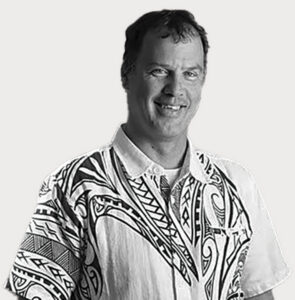
Professor Gene Rankey (University of Kansas, USA) is the new Editor-in-Chief of the Geological Society’s fully open access journal, Earth Science, Systems and Society (ES3). Gene joins an expert international Editorial Board, including Deputy Editors Dr Jen Roberts and Professor Iain Stewart, leading ES3 in showcasing the relevance of the geosciences to society and sustainability.
“I am honoured to serve the Geological Society as the next Editor-in-Chief of ES3,” Gene says. “I appreciate the opportunity to lead the journal as it provides innovation, illumination and inspiration on the path between Earth sciences and a sustainable future that enriches our planet’s communities.”
To learn more about ES3, visit: lyellcollection.org/journal/esss.
© Gene Rankey
Microbial processes in geoenergy systems
Geoenergy is now welcoming field-based, experimental and modelling studies that advance our understanding of microbial processes in geoenergy systems. The transition to a low-carbon energy system increasingly depends on geoenergy applications in the (deep) subsurface. These include geothermal energy production, underground storage of energy carriers (hydrogen) and waste (carbon, radioactive waste) and mining of elements critical for building renewable energy technologies. In all of these settings, the presence and activity of microorganisms can strongly influence operational outcomes. Their impact can be negative, for instance by clogging geothermal wells through biofilm formation and bioprecipitation, or through the consumption of hydrogen by hydrogenotrophic microorganisms present in the subsurface reservoirs used for storage. On the upside, microorganisms can play key enabling roles, such as in the underground production of biogas (methane) through biomethanation, the extraction of metals from ores through (in situ) bioleaching, and the enhanced sealing of carbon storage reservoirs through microbially enhanced carbonate precipitation.
The submission deadline is 31 May 2026. To learn more or submit to the collection, visit: lyellcollection.org/topic/collections/microbial
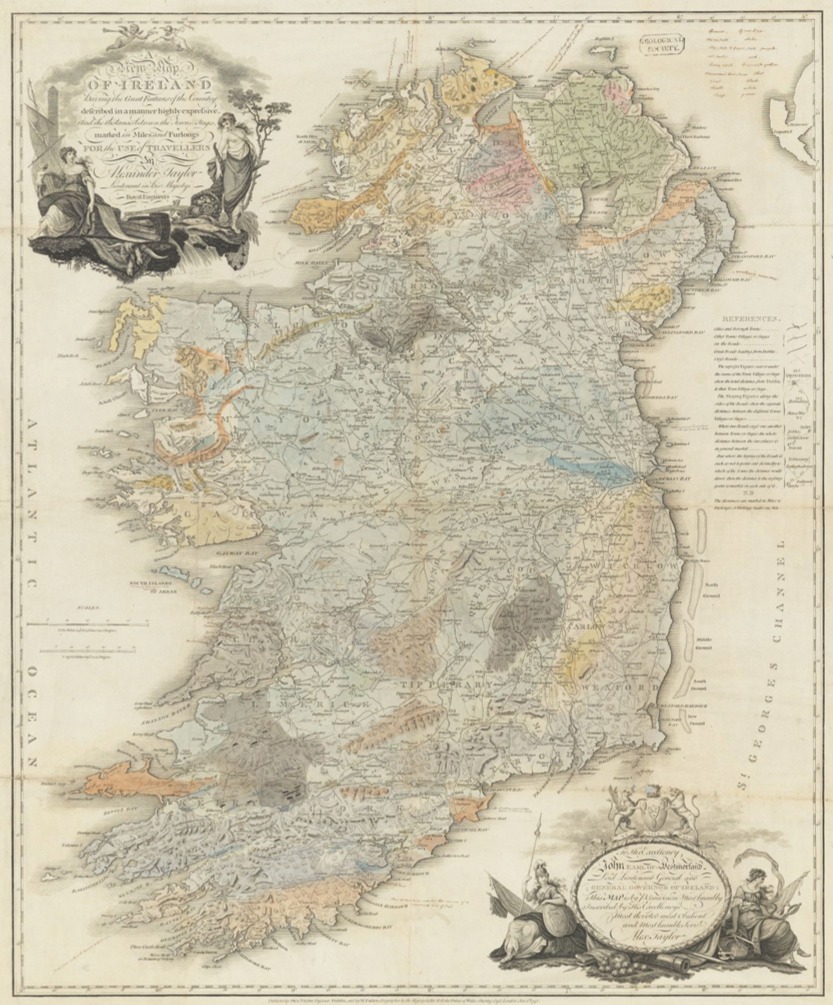
Map from the Society’s collections confirmed as Ireland’s earliest
A watercoloured manuscript map from our collections, which our Archivist suspected of being the earliest known geological map of Ireland, has been confirmed as such in a paper in the Irish Journal of Earth Sciences. Patrick N. Wyse Jackson states that the map represents a collaborative trans-Irish Sea effort between Richard John Griffith and the Society’s first President, George Bellas Greenough, to display Ireland’s geological structure, and probably dates from 1814.
Find out more about this exciting discovery via: muse.jhu.edu/pub/423/article/971064.
Thank you for helping to shape our future
A big thank you to everyone who took the time to complete the Geoscientist readership survey! Your feedback and insights are invaluable in helping us understand what matters most to you, from the topics you’d like to see explored to how you prefer to engage with our content. The responses will directly inform the magazine’s future trajectory, ensuring it continues to reflect and serve the needs of our diverse and dynamic community. We’re excited to put your ideas into action in the months ahead – stay tuned for updates.